Buy rolemodel.eu ?
We are moving the project
rolemodel.eu .
Are you interested in purchasing the domain
rolemodel.eu ?
domain@kv-gmbh.de · 0541-91531010
Buy rolemodel.eu ?
What is the derivation of the variance decomposition of the variance?
The variance decomposition of the variance is derived from the decomposition of the total variance into its components. This decomposition helps to understand the relative contributions of different sources of variation to the total variance. By partitioning the variance into its constituent parts, such as the variance due to different factors or sources, we can quantify the amount of variability explained by each component. This decomposition is commonly used in statistical analysis to assess the importance of various factors in explaining the overall variability in a dataset. **
What is the asymptotic variance?
The asymptotic variance is a measure of the variability of an estimator as the sample size approaches infinity. It represents the limit of the variance of the estimator as the sample size becomes very large. In statistical theory, it is used to assess the precision and reliability of an estimator in the long run. A smaller asymptotic variance indicates that the estimator is more efficient and provides more precise estimates as the sample size increases. **

Similar search terms for Variance
Top-Angebote
Products related to Variance:
-
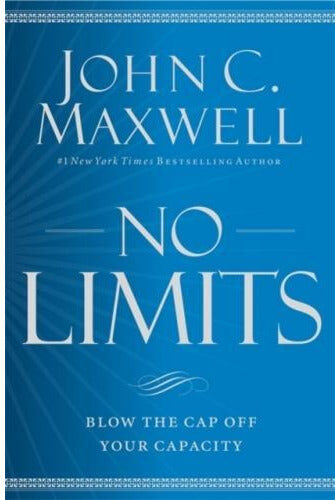
Little Brown Book Group No Limits: Blow the Cap Off Your Capacity by John C. Maxwell – Personal Growth & Leadership Development GuideNo Limits: Blow the CAP Off Your Capacity Description We often treat the word capacity as if it were a natural law of limitation. Unfortunately; most of us are much more comfortable defining what we perceive is off limits rather than what's possible. Could it be that many people have allowed what they perceive as capacity to define them? Have they allowed their perception to limit their attitudes about their potential? In his newest book; John Maxwell identifies 17 core capacities. Some of these are abilities we all already possess; such as energy; creativity and leadership. Others are aspects of our lives controlled by our choices; like our attitudes; character; and intentionality. Maxwell examines each of these 17 capacities; and provides clear and actionable advice on how you can increase your potential in each. He will guide you on how to identify; grow; and apply your critical capacities to your daily life. Once you've blown the 'cap' off your capacities; you'll find yourself more successful--and fulfilled--in your daily life.5,99 £*Shipping: 2,99 £Secure redirect to the provider
-
Piatkus Fierce Leadership By Susan Scott Fierce ConversationsFierce Leadership By Susan Scott Fierce Conversations For years, these mantras have been blindly adopted by business leaders everywhere but, as Susan Scott shows, these so-called best practices are ineffectual, cost companies vast sums and drive away the most valuable employees and customers. Yet they are so deeply ingrained in our organisational culture that no one has questioned them, until now. Informed by over a decade of research and work with CEOs and senior executives of the world's leading companies, Susan Scott reveals why these established practices are so wrongheaded and shows you how to spot the signs that you are falling prey to them and why they are adversely affecting your business. She then, in her direct, no-nonsense style, suggests a series of surprising and smart alternatives that you should put in their place.1,99 £*Shipping: 1,99 £Secure redirect to the provider
-
MACMILLAN A Higher Loyalty - Truth Lies And LeadershipA Higher Loyalty: Truth, Lies, and Leadership In his Number One bestselling memoir, former FBI director James Comey shares his never-before-told experiences from some of the highest-stakes situations of his career in the past two decades of American government, exploring what good, ethical leadership looks like, and how it drives sound decisions. His journey provides an unprecedented entry into the corridors of power, and a remarkable lesson in what makes an effective leader. Mr. Comey served as director of the FBI from 2013 to 2017, appointed to the post by President Barack Obama. He previously served as U.S. attorney for the Southern District of New York, and the U.S. deputy attorney general in the administration of President George W. Bush. From prosecuting the Mafia and Martha Stewart to helping change the Bush administration's policies on torture and electronic surveillance, overseeing the Hillary Clinton e-mail investigation as well as ties between the Trump campaign and Russia, Comey has been involved in some of the most consequential cases and policies of recent history.5,99 £*Shipping: 2,99 £Secure redirect to the provider
-
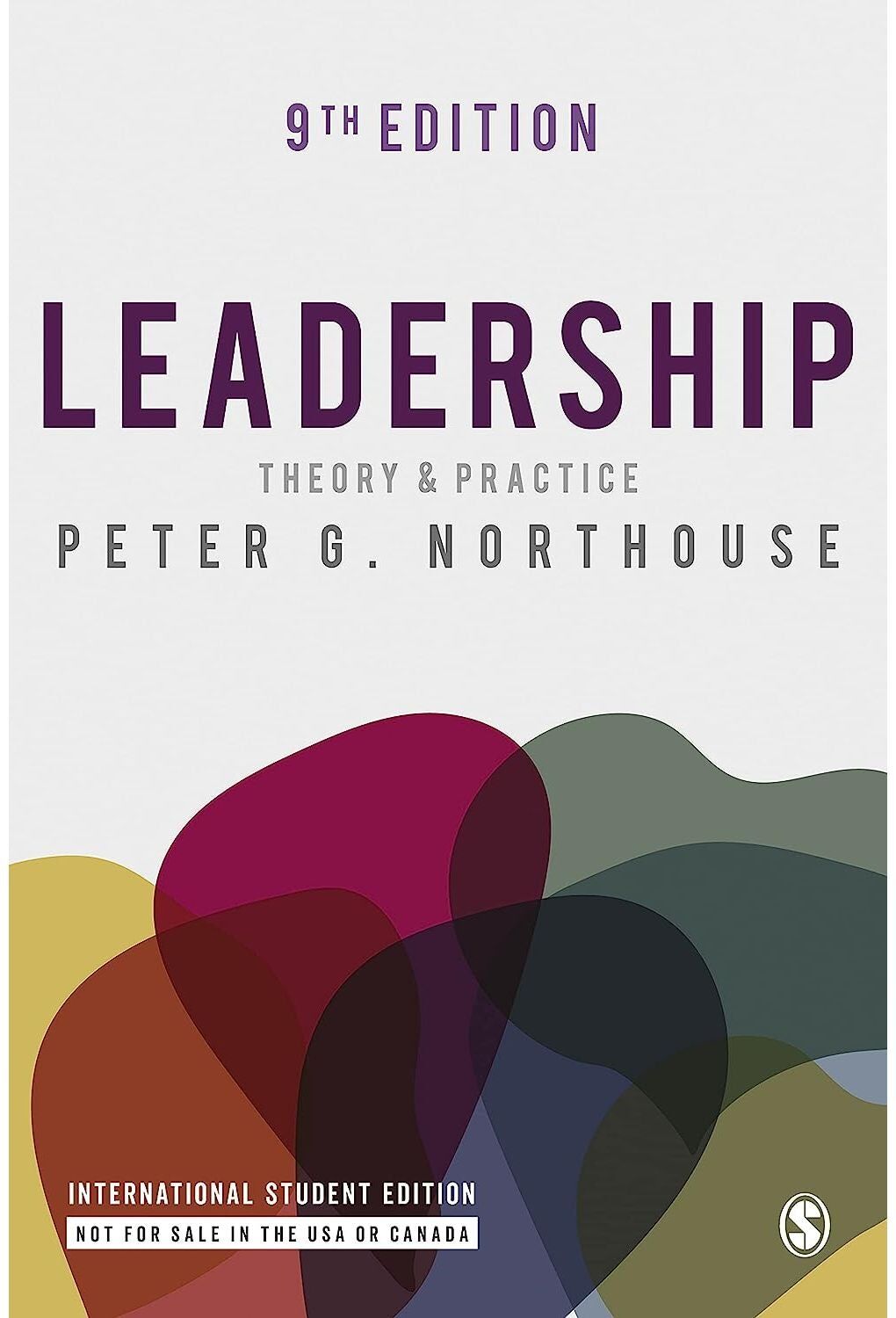
SAGE Publications Leadership - International Student Edition: Theory and PracticeThe market-leading Leadership: Theory and Practice by Peter G. Northouse presents an academically robust account of the major theories and models of leadership with a focus on how theory can inform practice. Case studies and questionnaires provide students with practical examples and opportunities to deepen their understanding of their own leadership style.The fully updated Ninth Edition features a new chapter on inclusive leadership, 17 new real-world cases that profile leaders from across the globe, a new discussion on leadership and morality, and examples of timely issues such as leadership during the COVID-19 pandemic. Key features include: A consistent chapter structure that outlines each approach and the major studies behind them, presents strengths and criticisms for each approach, and provides case studies and a self-assessment questionnaire at the end of each chapter, allowing students to easily compare and contrast the various theories. Three case studies in each chapter help students to apply leadership concepts in real-world scenarios. Self-assessments within each chapter provides self-assessment and reflection opportunities for each theory presented.45,49 £*Shipping: 0,00 £Secure redirect to the provider


-
What is variance in mathematics?
In mathematics, variance is a measure of how much a set of numbers varies or spreads out. It is a statistical measure that indicates the extent to which data points differ from the mean (average) of the set. A high variance means that the numbers in the set are spread out over a wider range, while a low variance means that the numbers are closer to the mean. Variance is calculated by taking the average of the squared differences between each data point and the mean. **
-
What is the difference between variance and standard deviation, and why is variance needed?
Variance and standard deviation are both measures of the spread or dispersion of a set of data. The main difference between the two is that variance is the average of the squared differences from the mean, while standard deviation is the square root of the variance. Standard deviation is often preferred over variance because it is in the same units as the original data, making it easier to interpret. However, variance is still needed in statistical calculations, such as in the calculation of the standard deviation, and it provides valuable information about the variability of the data. **
-
How do you calculate variance correctly?
Variance is calculated by finding the average of the squared differences between each data point and the mean of the data set. First, calculate the mean of the data set. Then, subtract the mean from each data point, square the result, and find the average of these squared differences. This average is the variance. The formula for variance is: variance = Σ (x - μ)² / n, where Σ represents the sum of the squared differences, x is each data point, μ is the mean, and n is the number of data points. **
-
How can the variance be transformed?
The variance can be transformed by applying a linear transformation to the data. This can involve multiplying each data point by a constant, adding a constant to each data point, or a combination of both. Another way to transform the variance is by applying a non-linear transformation to the data, such as taking the square root or the logarithm of the data. These transformations can help to stabilize the variance, make the data more normally distributed, or make the variance more homogeneous across different groups or levels of a factor. **

What is variance explanation in psychology?
Variance explanation in psychology refers to the extent to which a particular variable or set of variables can account for the variability in a certain psychological phenomenon or behavior. It is a measure of how much of the variability in a particular outcome can be attributed to the variables being studied. For example, in a study on the factors influencing depression, variance explanation would indicate how much of the variability in depression scores can be explained by factors such as genetics, environment, or personality traits. Understanding the variance explanation in psychology is important for identifying the key factors that contribute to a particular psychological outcome. **
What does variance stand for in statistics?
In statistics, variance is a measure of how spread out a set of data points are from the mean. It quantifies the variability or dispersion of a dataset. A high variance indicates that the data points are spread out widely, while a low variance indicates that the data points are clustered closely around the mean. Variance is calculated by taking the average of the squared differences between each data point and the mean. **
Top-Angebote
Products related to Variance:
-
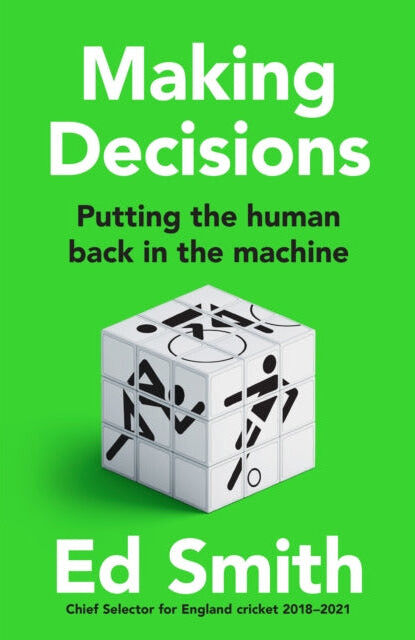
William Collins Making Decisions Book – Leadership, Judgement & Smart Thinking GuideWinning takes many forms. For fans of Matthew Syed, this is a great sports book about leadership, judgement and decision-making - rooted in the theory that helped Ed Smith lead England cricket to sustained success. And to help us all win more.'An absolutely fascinating book' THE GAME, The Times football pod How do you spot the opportunities that others miss?How do you turn a team's performance around?How do you make good decisions amid a tidal wave of information? And how can you improve? As chief selector for the England cricket team, Ed Smith pioneered new methods for building successful teams and watched his decisions tested in real time on the pitch. During his three-year tenure, England averaged 7 wins in every 10 completed matches, better than they have performed before or since. Making Decisions reveals Smith's unique approach to finding success in a fast-changing and increasingly data-reliant world.The best decisions, Smith argues, rely on a combination of differing kinds of intelligence: from algorithms to intuition. This is a truth that the most successful people know: data cannot account for everything, it must be harnessed with human insight. Whatever the power of data, humans aren't finished yet.Sharing for the first time the tools he introduced as England selector, Smith's book captures the immediacy of life at the sharp end, while also exploring frameworks from the top levels of sports, business and the arts. Decision-making is revealed as a creative enterprise, not a reductive system. Making Decisions offers an invaluable guide for those who want a better framework for developing, explaining and implementing new ideas.18,35 £*Shipping: 2,99 £Secure redirect to the provider
-
Wilco International LLP How to Win Friends and Influence People by Dale Carnegie Classic Self Help Book on Communication, Leadership, Confidence & Personal DevelopmentDiscover one of the world's best-known personal development books with How to Win Friends and Influence People by Dale Carnegie. First published in 1936, this enduring classic presents practical principles for communicating effectively, building positive relationships and working successfully with other people. Through memorable examples and straightforward advice, Carnegie explores how to make a positive impression, handle disagreements constructively, encourage cooperation and become a more effective communicator. The principles can be applied across everyday life, from personal relationships and social situations to business, management, sales, networking and leadership. Accessible and practical, How to Win Friends and Influence People remains popular with readers interested in improving their communication skills, confidence, interpersonal relationships and professional development. Key Features Classic personal development book by Dale Carnegie Practical principles for improving communication Explores relationships, leadership and interpersonal skills Useful for business, management, sales and networking Helps readers understand effective people skills Suitable for personal and professional development Excellent gift for entrepreneurs, managers and self-improvement readers9,99 £*Shipping: 2,99 £Secure redirect to the provider
-
Little Brown Book Group No Limits: Blow the Cap Off Your Capacity by John C. Maxwell – Personal Growth & Leadership Development GuideNo Limits: Blow the CAP Off Your Capacity Description We often treat the word capacity as if it were a natural law of limitation. Unfortunately; most of us are much more comfortable defining what we perceive is off limits rather than what's possible. Could it be that many people have allowed what they perceive as capacity to define them? Have they allowed their perception to limit their attitudes about their potential? In his newest book; John Maxwell identifies 17 core capacities. Some of these are abilities we all already possess; such as energy; creativity and leadership. Others are aspects of our lives controlled by our choices; like our attitudes; character; and intentionality. Maxwell examines each of these 17 capacities; and provides clear and actionable advice on how you can increase your potential in each. He will guide you on how to identify; grow; and apply your critical capacities to your daily life. Once you've blown the 'cap' off your capacities; you'll find yourself more successful--and fulfilled--in your daily life.5,99 £*Shipping: 2,99 £Secure redirect to the provider
-
Piatkus Fierce Leadership By Susan Scott Fierce ConversationsFierce Leadership By Susan Scott Fierce Conversations For years, these mantras have been blindly adopted by business leaders everywhere but, as Susan Scott shows, these so-called best practices are ineffectual, cost companies vast sums and drive away the most valuable employees and customers. Yet they are so deeply ingrained in our organisational culture that no one has questioned them, until now. Informed by over a decade of research and work with CEOs and senior executives of the world's leading companies, Susan Scott reveals why these established practices are so wrongheaded and shows you how to spot the signs that you are falling prey to them and why they are adversely affecting your business. She then, in her direct, no-nonsense style, suggests a series of surprising and smart alternatives that you should put in their place.1,99 £*Shipping: 1,99 £Secure redirect to the provider
-
What is the derivation of the variance decomposition of the variance?
The variance decomposition of the variance is derived from the decomposition of the total variance into its components. This decomposition helps to understand the relative contributions of different sources of variation to the total variance. By partitioning the variance into its constituent parts, such as the variance due to different factors or sources, we can quantify the amount of variability explained by each component. This decomposition is commonly used in statistical analysis to assess the importance of various factors in explaining the overall variability in a dataset. **
-
What is the asymptotic variance?
The asymptotic variance is a measure of the variability of an estimator as the sample size approaches infinity. It represents the limit of the variance of the estimator as the sample size becomes very large. In statistical theory, it is used to assess the precision and reliability of an estimator in the long run. A smaller asymptotic variance indicates that the estimator is more efficient and provides more precise estimates as the sample size increases. **
-
What is variance in mathematics?
In mathematics, variance is a measure of how much a set of numbers varies or spreads out. It is a statistical measure that indicates the extent to which data points differ from the mean (average) of the set. A high variance means that the numbers in the set are spread out over a wider range, while a low variance means that the numbers are closer to the mean. Variance is calculated by taking the average of the squared differences between each data point and the mean. **
-
What is the difference between variance and standard deviation, and why is variance needed?
Variance and standard deviation are both measures of the spread or dispersion of a set of data. The main difference between the two is that variance is the average of the squared differences from the mean, while standard deviation is the square root of the variance. Standard deviation is often preferred over variance because it is in the same units as the original data, making it easier to interpret. However, variance is still needed in statistical calculations, such as in the calculation of the standard deviation, and it provides valuable information about the variability of the data. **
Similar search terms for Variance
-
MACMILLAN A Higher Loyalty - Truth Lies And LeadershipA Higher Loyalty: Truth, Lies, and Leadership In his Number One bestselling memoir, former FBI director James Comey shares his never-before-told experiences from some of the highest-stakes situations of his career in the past two decades of American government, exploring what good, ethical leadership looks like, and how it drives sound decisions. His journey provides an unprecedented entry into the corridors of power, and a remarkable lesson in what makes an effective leader. Mr. Comey served as director of the FBI from 2013 to 2017, appointed to the post by President Barack Obama. He previously served as U.S. attorney for the Southern District of New York, and the U.S. deputy attorney general in the administration of President George W. Bush. From prosecuting the Mafia and Martha Stewart to helping change the Bush administration's policies on torture and electronic surveillance, overseeing the Hillary Clinton e-mail investigation as well as ties between the Trump campaign and Russia, Comey has been involved in some of the most consequential cases and policies of recent history.5,99 £*Shipping: 2,99 £Secure redirect to the provider
-
SAGE Publications Leadership - International Student Edition: Theory and PracticeThe market-leading Leadership: Theory and Practice by Peter G. Northouse presents an academically robust account of the major theories and models of leadership with a focus on how theory can inform practice. Case studies and questionnaires provide students with practical examples and opportunities to deepen their understanding of their own leadership style.The fully updated Ninth Edition features a new chapter on inclusive leadership, 17 new real-world cases that profile leaders from across the globe, a new discussion on leadership and morality, and examples of timely issues such as leadership during the COVID-19 pandemic. Key features include: A consistent chapter structure that outlines each approach and the major studies behind them, presents strengths and criticisms for each approach, and provides case studies and a self-assessment questionnaire at the end of each chapter, allowing students to easily compare and contrast the various theories. Three case studies in each chapter help students to apply leadership concepts in real-world scenarios. Self-assessments within each chapter provides self-assessment and reflection opportunities for each theory presented.45,49 £*Shipping: 0,00 £Secure redirect to the provider
-
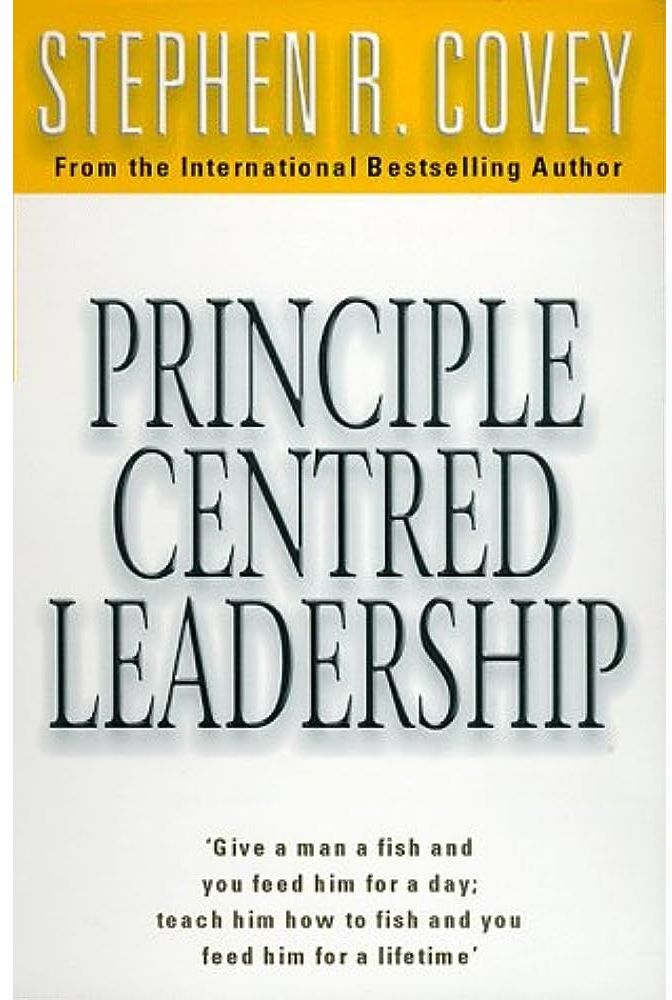
Simon & Schuster Principle Centred Leadership by Stephen R CoveyPRINCIPLE CENTRED LEADERSHIP will help solve these dilemmas - and many others:* how do we achieve a wise and renewing balance between work and family in the midst of constant pressures and crises?* how do we unleash the creativity, talent and energy of the vast majority of the work force, whose jobs neither require nor reward such resources?* how can we have a culture characterised by change, flexibility and continuous improvement and still maintain a sense of stability and security?* how do we create team spirit and harmony among people and departments that have been criticising and attacking each other for years?* how do we get people and culture aligned with strategy, so that everyone in an organisation is as committed to the strategy as those who formulated it?6,99 £*Shipping: 2,99 £Secure redirect to the provider
-
Touch of Class Influence Metal Wall Sculpture Multi Metallic , Multi MetallicThe bronze and gold curved strips seem to Influence the direction of the silver orbs in this metal wall sculpture. Smaller circular bursts, secured by wire rods, are accented in copper, gold, and silver. Handcrafted of plated steel, this wall...399,00 $*Shipping: 0,00 $Secure redirect to the provider
-
How do you calculate variance correctly?
Variance is calculated by finding the average of the squared differences between each data point and the mean of the data set. First, calculate the mean of the data set. Then, subtract the mean from each data point, square the result, and find the average of these squared differences. This average is the variance. The formula for variance is: variance = Σ (x - μ)² / n, where Σ represents the sum of the squared differences, x is each data point, μ is the mean, and n is the number of data points. **
-
How can the variance be transformed?
The variance can be transformed by applying a linear transformation to the data. This can involve multiplying each data point by a constant, adding a constant to each data point, or a combination of both. Another way to transform the variance is by applying a non-linear transformation to the data, such as taking the square root or the logarithm of the data. These transformations can help to stabilize the variance, make the data more normally distributed, or make the variance more homogeneous across different groups or levels of a factor. **
-
What is variance explanation in psychology?
Variance explanation in psychology refers to the extent to which a particular variable or set of variables can account for the variability in a certain psychological phenomenon or behavior. It is a measure of how much of the variability in a particular outcome can be attributed to the variables being studied. For example, in a study on the factors influencing depression, variance explanation would indicate how much of the variability in depression scores can be explained by factors such as genetics, environment, or personality traits. Understanding the variance explanation in psychology is important for identifying the key factors that contribute to a particular psychological outcome. **
-
What does variance stand for in statistics?
In statistics, variance is a measure of how spread out a set of data points are from the mean. It quantifies the variability or dispersion of a dataset. A high variance indicates that the data points are spread out widely, while a low variance indicates that the data points are clustered closely around the mean. Variance is calculated by taking the average of the squared differences between each data point and the mean. **
* All prices are inclusive of VAT and, if applicable, plus shipping costs. The offer information is based on the details provided by the respective shop and is updated through automated processes. Real-time updates do not occur, so deviations can occur in individual cases. ** Note: Parts of this content were created by AI.