Buy rolemodel.eu ?
We are moving the project
rolemodel.eu .
Are you interested in purchasing the domain
rolemodel.eu ?
domain@kv-gmbh.de · 0541-91531010
Buy rolemodel.eu ?
What is the difference between the Nikkor 50mm 1.8G and the Nikkor 35mm 1.8G?
The main difference between the Nikkor 50mm 1.8G and the Nikkor 35mm 1.8G lenses is their focal length. The 50mm lens will provide a narrower field of view compared to the 35mm lens, making it more suitable for portraits and close-up shots. On the other hand, the 35mm lens will offer a wider field of view, making it better for capturing landscapes and group shots. Additionally, the 35mm lens may have slightly less background blur (bokeh) compared to the 50mm lens due to its wider angle of view. **
Doesn't the AF Nikkor 50mm 1.8 automatically focus?
Yes, the AF Nikkor 50mm 1.8 lens is an autofocus lens, meaning it can automatically focus on the subject when used with a compatible camera body. This allows for quick and convenient focusing, especially when capturing fast-moving subjects or when shooting in low light conditions. However, it's important to note that the autofocus performance may vary depending on the camera body and shooting conditions. **


Similar search terms for Nikkor
Top-Angebote
Products related to Nikkor:
-
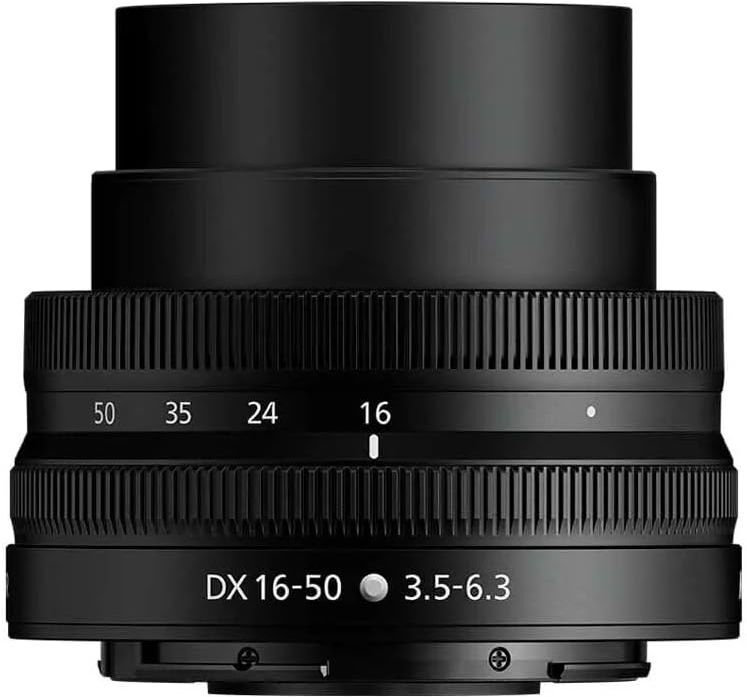
Nikon NIKKOR Z DX 16-50mm f/3.5-6.3 VR Lens - BlackDescription Capture everything from landscapes to portraits with the Nikon NIKKOR Z DX 16-50mm f/3.5-6.3 VR Lens in Black. Designed for Nikon Z DX mirrorless cameras, this compact standard zoom lens delivers outstanding image quality in a lightweight, retractable design, making it ideal for travel, everyday photography, street scenes, and video recording. Covering a versatile 16-50mm focal length range (24-75mm equivalent in 35mm format), the lens offers flexibility for wide-angle and portrait photography. Built-in Vibration Reduction (VR) image stabilisation helps reduce camera shake for sharper handheld images and smoother video recording, while the stepping motor provides fast, quiet, and accurate autofocus performance. Its retractable construction makes the lens highly portable, while Nikon's advanced optical design ensures sharp detail, vibrant colours, and reduced distortion throughout the zoom range.187,99 £*Shipping: 0,00 £Secure redirect to the provider
-
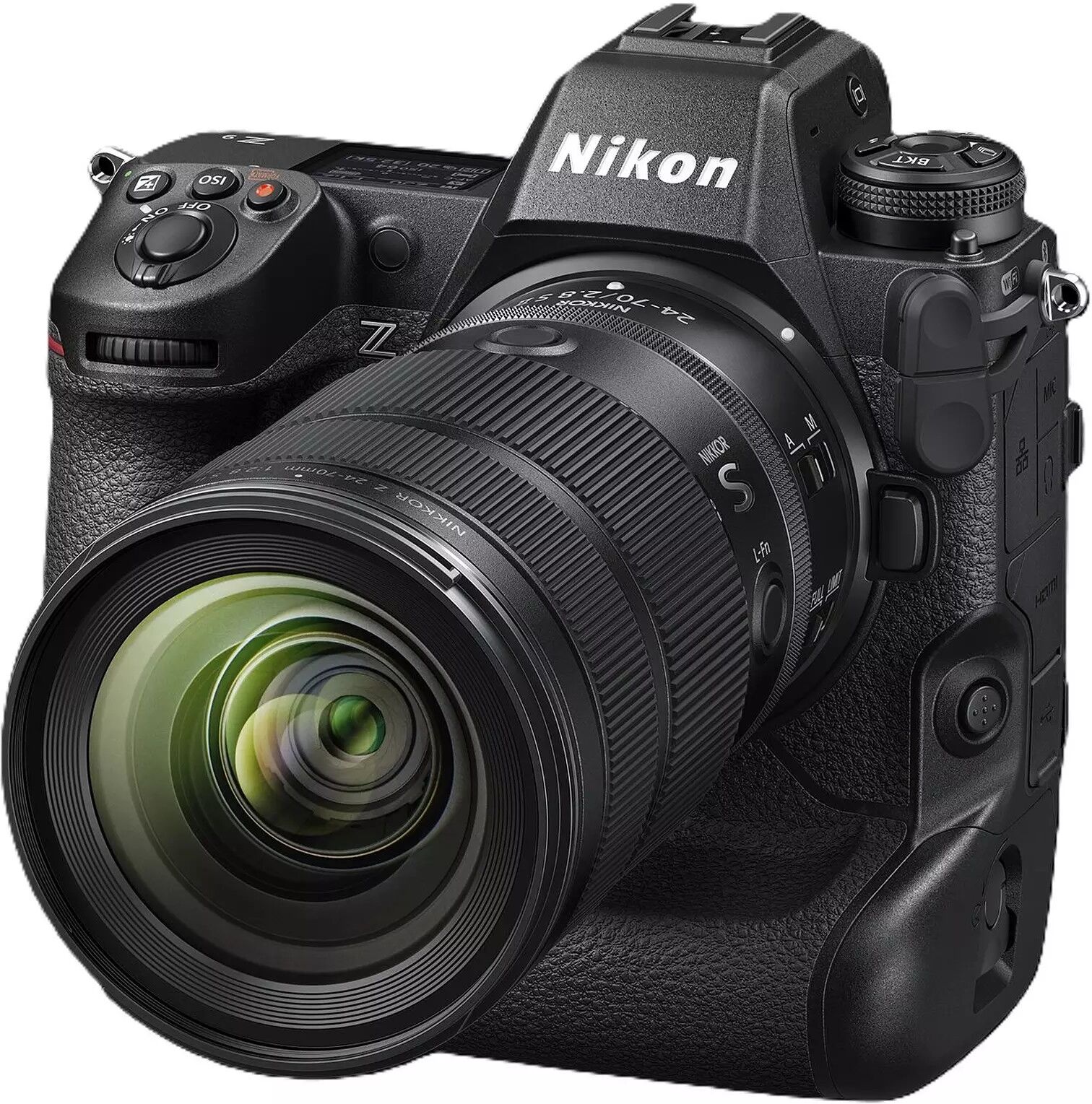
NIKKOR Z 24-70mm f/2.8 S II Standard Zoom Lens for Nikon Z Mount CamerasDescription Capture exceptional images with the NIKKOR Z 24-70mm f/2.8 S II, a premium professional standard zoom lens designed for Nikon Z Series mirrorless cameras. Covering a versatile focal range from wide-angle to short telephoto, this high-performance lens is ideal for landscapes, portraits, weddings, events, travel, and everyday photography. The constant f/2.8 maximum aperture delivers outstanding low-light performance and beautiful background blur, while advanced optical engineering produces exceptional sharpness, contrast, and colour accuracy throughout the zoom range. Fast, quiet autofocus ensures precise subject tracking for both photography and video recording. Built with weather-resistant construction and a durable professional design, the NIKKOR Z 24-70mm f/2.8 S II is engineered to perform reliably in demanding shooting environments while maintaining excellent portability and handling.1559,99 £*Shipping: 0,00 £Secure redirect to the provider
-
Nikon NIKKOR Z DX 16-50mm f/3.5-6.3 VR Lens – Compact Wide-Angle Zoom with Vibration Reduction, Used - Good.gadcet-pdp{--g-green:#00a651;color:#1f2430;line-height:1.55;font-size:inherit;max-width:760px}.gadcet-pdp>*:first-child{margin-top:0}.gadcet-pdp p{margin:0 0.9em}.gadcet-pdp h3{font-size:1.05em;font-weight:600;color:#11161f;margin:1.4em 0.5em;padding-left:.5em;border-left:3px solid var(--g-green);border-radius:0;line-height:1.3}.gadcet-pdp ul{list-style:none!important;margin:0 0.9em;padding:0!important}.gadcet-pdp ul li{position:relative;padding:.1em 0.1em 1.5em;margin:0}.gadcet-pdp ul li::before{content:"";position:absolute;left:.16em;top:.45em;width:.36em;height:.66em;border:solid var(--g-green);border-width:0.14em.14em 0;transform:rotate(45deg)}.gadcet-pdp table{width:100%;border-collapse:collapse;margin:.3em 0 1em;font-size:.95em;border:1px solid #e7e9ee!important;border-radius:8px;overflow:hidden}.gadcet-pdp table td{padding:.5em.8em;border-bottom:1px solid #eef0f4!important;vertical-align:top}.gadcet-pdp table tr:last-child td{border-bottom:0!important}.gadcet-pdp table tr:nth-child(even){background:#f7f9f8}.gadcet-pdp table td:first-child{font-weight:600;color:#454c59;width:40%}@media (max-width:600px){.gadcet-pdp table td:first-child{width:42%}} Travel light without compromising on versatility. The Nikon NIKKOR Z DX 16-50mm f/3.5-6.3 VR is an ultra-compact zoom lens for Nikon Z-series DX mirrorless cameras, covering everything from wide landscapes to natural portraits – all in a 135g retractable design with built-in Vibration Reduction. Key Features Versatile 16-50mm zoom range (24-75mm equivalent on full-frame) Ultra-compact, retractable design weighing approximately 135g Built-in Vibration Reduction (up to 4.5 stops) Minimum focus distance of approximately 0.2m at 24mm Customisable control ring for aperture, ISO, exposure compensation or manual focus Optical construction: 9 elements in 7 groups with ED and aspherical elements 7-blade rounded diaphragm for smooth bokeh Virtually silent autofocus suitable for video Benefits Capture wide scenes and tighter shots without changing lenses Keep your kit light for travel, street photography and everyday outings Shoot clearer handheld photos in low light with effective stabilisation Focus close for detailed shots of food, products and small subjects Enjoy smooth, quiet operation during video recording Specifications Focal length 16-50mm (35mm equivalent: 24-75mm) Maximum aperture f/3.5-6.3 Lens construction 9 elements in 7 groups (1 ED, 4 aspherical) Minimum focus distance Approx. 0.2m (at 24mm) Vibration Reduction Up to 4.5 stops Diaphragm blades 7 (rounded) Weight Approx. 135g Retracted length Approx. 32mm What You'll Receive Choose from New or pre-owned conditions to suit your budget – each lens is supplied as a standalone unit with the condition accurately reflected in the price. Ideal For Perfect for Nikon Z50, Z30 and Z fc users who want a lightweight, everyday zoom for travel, vlogging, street photography and family memories.129,00 £*Shipping: 0,00 £Secure redirect to the provider
-
William Collins Making Decisions Book – Leadership, Judgement & Smart Thinking GuideWinning takes many forms. For fans of Matthew Syed, this is a great sports book about leadership, judgement and decision-making - rooted in the theory that helped Ed Smith lead England cricket to sustained success. And to help us all win more.'An absolutely fascinating book' THE GAME, The Times football pod How do you spot the opportunities that others miss?How do you turn a team's performance around?How do you make good decisions amid a tidal wave of information? And how can you improve? As chief selector for the England cricket team, Ed Smith pioneered new methods for building successful teams and watched his decisions tested in real time on the pitch. During his three-year tenure, England averaged 7 wins in every 10 completed matches, better than they have performed before or since. Making Decisions reveals Smith's unique approach to finding success in a fast-changing and increasingly data-reliant world.The best decisions, Smith argues, rely on a combination of differing kinds of intelligence: from algorithms to intuition. This is a truth that the most successful people know: data cannot account for everything, it must be harnessed with human insight. Whatever the power of data, humans aren't finished yet.Sharing for the first time the tools he introduced as England selector, Smith's book captures the immediacy of life at the sharp end, while also exploring frameworks from the top levels of sports, business and the arts. Decision-making is revealed as a creative enterprise, not a reductive system. Making Decisions offers an invaluable guide for those who want a better framework for developing, explaining and implementing new ideas.18,35 £*Shipping: 2,99 £Secure redirect to the provider


-
Is the focus ring of the Nikkor 35mm lens strange?
No, the focus ring of the Nikkor 35mm lens is not considered strange. It is designed to provide smooth and precise manual focusing control, allowing photographers to easily adjust the focus to achieve the desired sharpness in their images. The focus ring is well-positioned and responsive, making it a reliable tool for photographers who prefer manual focusing over autofocus. Overall, the focus ring of the Nikkor 35mm lens is considered to be user-friendly and effective. **
-
Do you have experience with the Nikkor 50mm f2 AI?
I'm an AI and do not have personal experiences. However, the Nikkor 50mm f2 AI lens is known for its sharpness and image quality. It is a manual focus lens that is popular among photographers for its compact size and excellent low-light performance. The f/2 aperture allows for beautiful bokeh and is great for portrait photography. **
-
Which is better, the Nikkor 55-200 or the Tamron 18-200?
The choice between the Nikkor 55-200 and the Tamron 18-200 depends on your specific needs and preferences. The Nikkor 55-200 is known for its sharpness and image quality, especially at the longer end of the zoom range. On the other hand, the Tamron 18-200 offers a wider focal length range, making it more versatile for different shooting situations. Ultimately, if you prioritize image quality and sharpness, the Nikkor 55-200 may be the better option, but if versatility and convenience are more important to you, the Tamron 18-200 could be the preferred choice. **
-
What is the difference between the Nikkor 50mm 1.4D and the 1.4G?
The main difference between the Nikkor 50mm 1.4D and the 1.4G is the autofocus system. The 1.4D has a traditional autofocus motor, while the 1.4G has a Silent Wave Motor (SWM) which provides faster and quieter autofocus performance. Additionally, the 1.4G has an aspherical lens element which helps to reduce aberrations and improve image quality. The 1.4G also has a more modern design and build quality compared to the 1.4D. **

How suitable is the Nikkor Z 24-70 1:4 lens for astrophotography?
The Nikkor Z 24-70 1:4 lens is not specifically designed for astrophotography, as it has a maximum aperture of f/4 which may not be ideal for capturing faint stars in low light conditions. For astrophotography, lenses with wider apertures such as f/2.8 or wider are generally preferred to allow more light to enter the camera sensor. However, the lens can still be used for astrophotography with longer exposure times and higher ISO settings to compensate for the narrower aperture. Overall, while the Nikkor Z 24-70 1:4 lens may not be the most suitable choice for astrophotography, it can still produce decent results with the right settings and techniques. **
Does the Nikon AF-S DX Nikkor 35mm 1.8G lens have image stabilization?
No, the Nikon AF-S DX Nikkor 35mm 1.8G lens does not have image stabilization. This lens is a prime lens with a fixed focal length and a wide aperture, but it does not include image stabilization technology. However, it is still a popular choice for its sharpness and low-light performance, especially for portrait and street photography. If image stabilization is a priority, photographers may want to consider other lenses with this feature. **
Top-Angebote
Products related to Nikkor:
-
Nikon NIKKOR Z 70-180mm f/2.8 Lens - BlackDescription Ideal for photography enthusiasts seeking versatility, the Nikon NIKKOR Z 70-180mm f/2.8 lens is a remarkable all-purpose telephoto zoom lens. This lens features short minimum focusing distances, allowing for crisp shots at closer ranges. By attaching the Z TELECONVERTER TC-2.0x, users can achieve macro-style images with an impressive magnification ratio of almost life-size at 0.96x. Its lightweight design and dependable weather sealing make it perfect for various shooting conditions, whether you're capturing portraits, landscapes, or events. An essential addition for photographers looking to expand their creative options.882,99 £*Shipping: 0,00 £Secure redirect to the provider
-
Nikon NIKKOR Z 50mm f/1.8 S Standard Prime LensThe Nikon NIKKOR Z 50mm f/1.8 S is a standard prime lens for Nikon Z-mount mirrorless cameras, designed for full-frame (FX) bodies and also usable on DX-format Z cameras. Its optical design uses 12 elements in 9 groups, including two ED glass elements and two aspherical elements, with Nikon's Nano Crystal Coat to reduce ghosting and flare. A stepping motor drives quiet autofocus, suited to both stills and video, and it focuses down to 0.4 m. The nine-blade rounded diaphragm gives smooth background blur, and the lens takes 62 mm filters.431,49 £*Shipping: 0,00 £Secure redirect to the provider
-
Nikon NIKKOR Z DX 16-50mm f/3.5-6.3 VR Lens - BlackDescription Capture everything from landscapes to portraits with the Nikon NIKKOR Z DX 16-50mm f/3.5-6.3 VR Lens in Black. Designed for Nikon Z DX mirrorless cameras, this compact standard zoom lens delivers outstanding image quality in a lightweight, retractable design, making it ideal for travel, everyday photography, street scenes, and video recording. Covering a versatile 16-50mm focal length range (24-75mm equivalent in 35mm format), the lens offers flexibility for wide-angle and portrait photography. Built-in Vibration Reduction (VR) image stabilisation helps reduce camera shake for sharper handheld images and smoother video recording, while the stepping motor provides fast, quiet, and accurate autofocus performance. Its retractable construction makes the lens highly portable, while Nikon's advanced optical design ensures sharp detail, vibrant colours, and reduced distortion throughout the zoom range.187,99 £*Shipping: 0,00 £Secure redirect to the provider
-
NIKKOR Z 24-70mm f/2.8 S II Standard Zoom Lens for Nikon Z Mount CamerasDescription Capture exceptional images with the NIKKOR Z 24-70mm f/2.8 S II, a premium professional standard zoom lens designed for Nikon Z Series mirrorless cameras. Covering a versatile focal range from wide-angle to short telephoto, this high-performance lens is ideal for landscapes, portraits, weddings, events, travel, and everyday photography. The constant f/2.8 maximum aperture delivers outstanding low-light performance and beautiful background blur, while advanced optical engineering produces exceptional sharpness, contrast, and colour accuracy throughout the zoom range. Fast, quiet autofocus ensures precise subject tracking for both photography and video recording. Built with weather-resistant construction and a durable professional design, the NIKKOR Z 24-70mm f/2.8 S II is engineered to perform reliably in demanding shooting environments while maintaining excellent portability and handling.1559,99 £*Shipping: 0,00 £Secure redirect to the provider
-
What is the difference between the Nikkor 50mm 1.8G and the Nikkor 35mm 1.8G?
The main difference between the Nikkor 50mm 1.8G and the Nikkor 35mm 1.8G lenses is their focal length. The 50mm lens will provide a narrower field of view compared to the 35mm lens, making it more suitable for portraits and close-up shots. On the other hand, the 35mm lens will offer a wider field of view, making it better for capturing landscapes and group shots. Additionally, the 35mm lens may have slightly less background blur (bokeh) compared to the 50mm lens due to its wider angle of view. **
-
Doesn't the AF Nikkor 50mm 1.8 automatically focus?
Yes, the AF Nikkor 50mm 1.8 lens is an autofocus lens, meaning it can automatically focus on the subject when used with a compatible camera body. This allows for quick and convenient focusing, especially when capturing fast-moving subjects or when shooting in low light conditions. However, it's important to note that the autofocus performance may vary depending on the camera body and shooting conditions. **
-
Is the focus ring of the Nikkor 35mm lens strange?
No, the focus ring of the Nikkor 35mm lens is not considered strange. It is designed to provide smooth and precise manual focusing control, allowing photographers to easily adjust the focus to achieve the desired sharpness in their images. The focus ring is well-positioned and responsive, making it a reliable tool for photographers who prefer manual focusing over autofocus. Overall, the focus ring of the Nikkor 35mm lens is considered to be user-friendly and effective. **
-
Do you have experience with the Nikkor 50mm f2 AI?
I'm an AI and do not have personal experiences. However, the Nikkor 50mm f2 AI lens is known for its sharpness and image quality. It is a manual focus lens that is popular among photographers for its compact size and excellent low-light performance. The f/2 aperture allows for beautiful bokeh and is great for portrait photography. **
Similar search terms for Nikkor
-
Nikon NIKKOR Z DX 16-50mm f/3.5-6.3 VR Lens – Compact Wide-Angle Zoom with Vibration Reduction, Used - Good.gadcet-pdp{--g-green:#00a651;color:#1f2430;line-height:1.55;font-size:inherit;max-width:760px}.gadcet-pdp>*:first-child{margin-top:0}.gadcet-pdp p{margin:0 0.9em}.gadcet-pdp h3{font-size:1.05em;font-weight:600;color:#11161f;margin:1.4em 0.5em;padding-left:.5em;border-left:3px solid var(--g-green);border-radius:0;line-height:1.3}.gadcet-pdp ul{list-style:none!important;margin:0 0.9em;padding:0!important}.gadcet-pdp ul li{position:relative;padding:.1em 0.1em 1.5em;margin:0}.gadcet-pdp ul li::before{content:"";position:absolute;left:.16em;top:.45em;width:.36em;height:.66em;border:solid var(--g-green);border-width:0.14em.14em 0;transform:rotate(45deg)}.gadcet-pdp table{width:100%;border-collapse:collapse;margin:.3em 0 1em;font-size:.95em;border:1px solid #e7e9ee!important;border-radius:8px;overflow:hidden}.gadcet-pdp table td{padding:.5em.8em;border-bottom:1px solid #eef0f4!important;vertical-align:top}.gadcet-pdp table tr:last-child td{border-bottom:0!important}.gadcet-pdp table tr:nth-child(even){background:#f7f9f8}.gadcet-pdp table td:first-child{font-weight:600;color:#454c59;width:40%}@media (max-width:600px){.gadcet-pdp table td:first-child{width:42%}} Travel light without compromising on versatility. The Nikon NIKKOR Z DX 16-50mm f/3.5-6.3 VR is an ultra-compact zoom lens for Nikon Z-series DX mirrorless cameras, covering everything from wide landscapes to natural portraits – all in a 135g retractable design with built-in Vibration Reduction. Key Features Versatile 16-50mm zoom range (24-75mm equivalent on full-frame) Ultra-compact, retractable design weighing approximately 135g Built-in Vibration Reduction (up to 4.5 stops) Minimum focus distance of approximately 0.2m at 24mm Customisable control ring for aperture, ISO, exposure compensation or manual focus Optical construction: 9 elements in 7 groups with ED and aspherical elements 7-blade rounded diaphragm for smooth bokeh Virtually silent autofocus suitable for video Benefits Capture wide scenes and tighter shots without changing lenses Keep your kit light for travel, street photography and everyday outings Shoot clearer handheld photos in low light with effective stabilisation Focus close for detailed shots of food, products and small subjects Enjoy smooth, quiet operation during video recording Specifications Focal length 16-50mm (35mm equivalent: 24-75mm) Maximum aperture f/3.5-6.3 Lens construction 9 elements in 7 groups (1 ED, 4 aspherical) Minimum focus distance Approx. 0.2m (at 24mm) Vibration Reduction Up to 4.5 stops Diaphragm blades 7 (rounded) Weight Approx. 135g Retracted length Approx. 32mm What You'll Receive Choose from New or pre-owned conditions to suit your budget – each lens is supplied as a standalone unit with the condition accurately reflected in the price. Ideal For Perfect for Nikon Z50, Z30 and Z fc users who want a lightweight, everyday zoom for travel, vlogging, street photography and family memories.129,00 £*Shipping: 0,00 £Secure redirect to the provider
-
William Collins Making Decisions Book – Leadership, Judgement & Smart Thinking GuideWinning takes many forms. For fans of Matthew Syed, this is a great sports book about leadership, judgement and decision-making - rooted in the theory that helped Ed Smith lead England cricket to sustained success. And to help us all win more.'An absolutely fascinating book' THE GAME, The Times football pod How do you spot the opportunities that others miss?How do you turn a team's performance around?How do you make good decisions amid a tidal wave of information? And how can you improve? As chief selector for the England cricket team, Ed Smith pioneered new methods for building successful teams and watched his decisions tested in real time on the pitch. During his three-year tenure, England averaged 7 wins in every 10 completed matches, better than they have performed before or since. Making Decisions reveals Smith's unique approach to finding success in a fast-changing and increasingly data-reliant world.The best decisions, Smith argues, rely on a combination of differing kinds of intelligence: from algorithms to intuition. This is a truth that the most successful people know: data cannot account for everything, it must be harnessed with human insight. Whatever the power of data, humans aren't finished yet.Sharing for the first time the tools he introduced as England selector, Smith's book captures the immediacy of life at the sharp end, while also exploring frameworks from the top levels of sports, business and the arts. Decision-making is revealed as a creative enterprise, not a reductive system. Making Decisions offers an invaluable guide for those who want a better framework for developing, explaining and implementing new ideas.18,35 £*Shipping: 2,99 £Secure redirect to the provider
-
Wilco International LLP How to Win Friends and Influence People by Dale Carnegie Classic Self Help Book on Communication, Leadership, Confidence & Personal DevelopmentDiscover one of the world's best-known personal development books with How to Win Friends and Influence People by Dale Carnegie. First published in 1936, this enduring classic presents practical principles for communicating effectively, building positive relationships and working successfully with other people. Through memorable examples and straightforward advice, Carnegie explores how to make a positive impression, handle disagreements constructively, encourage cooperation and become a more effective communicator. The principles can be applied across everyday life, from personal relationships and social situations to business, management, sales, networking and leadership. Accessible and practical, How to Win Friends and Influence People remains popular with readers interested in improving their communication skills, confidence, interpersonal relationships and professional development. Key Features Classic personal development book by Dale Carnegie Practical principles for improving communication Explores relationships, leadership and interpersonal skills Useful for business, management, sales and networking Helps readers understand effective people skills Suitable for personal and professional development Excellent gift for entrepreneurs, managers and self-improvement readers9,99 £*Shipping: 2,99 £Secure redirect to the provider
-
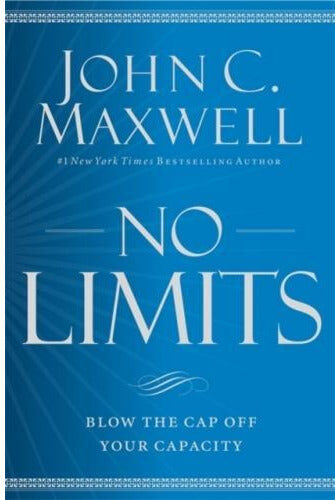
Little Brown Book Group No Limits: Blow the Cap Off Your Capacity by John C. Maxwell – Personal Growth & Leadership Development GuideNo Limits: Blow the CAP Off Your Capacity Description We often treat the word capacity as if it were a natural law of limitation. Unfortunately; most of us are much more comfortable defining what we perceive is off limits rather than what's possible. Could it be that many people have allowed what they perceive as capacity to define them? Have they allowed their perception to limit their attitudes about their potential? In his newest book; John Maxwell identifies 17 core capacities. Some of these are abilities we all already possess; such as energy; creativity and leadership. Others are aspects of our lives controlled by our choices; like our attitudes; character; and intentionality. Maxwell examines each of these 17 capacities; and provides clear and actionable advice on how you can increase your potential in each. He will guide you on how to identify; grow; and apply your critical capacities to your daily life. Once you've blown the 'cap' off your capacities; you'll find yourself more successful--and fulfilled--in your daily life.5,99 £*Shipping: 2,99 £Secure redirect to the provider
-
Which is better, the Nikkor 55-200 or the Tamron 18-200?
The choice between the Nikkor 55-200 and the Tamron 18-200 depends on your specific needs and preferences. The Nikkor 55-200 is known for its sharpness and image quality, especially at the longer end of the zoom range. On the other hand, the Tamron 18-200 offers a wider focal length range, making it more versatile for different shooting situations. Ultimately, if you prioritize image quality and sharpness, the Nikkor 55-200 may be the better option, but if versatility and convenience are more important to you, the Tamron 18-200 could be the preferred choice. **
-
What is the difference between the Nikkor 50mm 1.4D and the 1.4G?
The main difference between the Nikkor 50mm 1.4D and the 1.4G is the autofocus system. The 1.4D has a traditional autofocus motor, while the 1.4G has a Silent Wave Motor (SWM) which provides faster and quieter autofocus performance. Additionally, the 1.4G has an aspherical lens element which helps to reduce aberrations and improve image quality. The 1.4G also has a more modern design and build quality compared to the 1.4D. **
-
How suitable is the Nikkor Z 24-70 1:4 lens for astrophotography?
The Nikkor Z 24-70 1:4 lens is not specifically designed for astrophotography, as it has a maximum aperture of f/4 which may not be ideal for capturing faint stars in low light conditions. For astrophotography, lenses with wider apertures such as f/2.8 or wider are generally preferred to allow more light to enter the camera sensor. However, the lens can still be used for astrophotography with longer exposure times and higher ISO settings to compensate for the narrower aperture. Overall, while the Nikkor Z 24-70 1:4 lens may not be the most suitable choice for astrophotography, it can still produce decent results with the right settings and techniques. **
-
Does the Nikon AF-S DX Nikkor 35mm 1.8G lens have image stabilization?
No, the Nikon AF-S DX Nikkor 35mm 1.8G lens does not have image stabilization. This lens is a prime lens with a fixed focal length and a wide aperture, but it does not include image stabilization technology. However, it is still a popular choice for its sharpness and low-light performance, especially for portrait and street photography. If image stabilization is a priority, photographers may want to consider other lenses with this feature. **
* All prices are inclusive of VAT and, if applicable, plus shipping costs. The offer information is based on the details provided by the respective shop and is updated through automated processes. Real-time updates do not occur, so deviations can occur in individual cases. ** Note: Parts of this content were created by AI.