Buy rolemodel.eu ?
We are moving the project
rolemodel.eu .
Are you interested in purchasing the domain
rolemodel.eu ?
domain@kv-gmbh.de · 0541-91531010
Buy rolemodel.eu ?
How many dipeptides are formed from L-alanine and L-glycine?
When L-alanine and L-glycine combine, they form one dipeptide. This is because a dipeptide is composed of two amino acids linked together by a peptide bond. In this case, L-alanine and L-glycine combine to form the dipeptide Ala-Gly. **
Why doesn't glycine have D- and L-forms?
Glycine does not have D- and L-forms because it is the simplest amino acid and has a hydrogen atom as its side chain. Unlike other amino acids that have a chiral carbon atom in their side chains, glycine's side chain is not chiral, meaning it does not have a mirror image form. As a result, glycine does not have D- and L-forms like other amino acids. **

Similar search terms for L-glycine
Top-Angebote
Products related to L-glycine:




-
Does glycine affect the heart?
Yes, glycine can affect the heart. It is an amino acid that plays a role in the synthesis of proteins and is also involved in the production of collagen, which is important for the structure and function of the heart. Additionally, glycine has been studied for its potential benefits in protecting the heart from damage caused by various factors such as oxidative stress and inflammation. However, more research is needed to fully understand the impact of glycine on heart health. **
-
Why is glycine not significantly polar?
Glycine is not significantly polar because it is a small, non-polar amino acid with a hydrogen atom as its side chain. This side chain does not contain any charged or highly electronegative atoms like oxygen or nitrogen that would create a polar interaction. As a result, glycine does not readily participate in hydrogen bonding or other polar interactions, making it a non-polar molecule overall. **
-
What is the electrical conductivity of glycine?
Glycine is a non-conductive amino acid, meaning it does not conduct electricity in its pure form. This is because it does not contain any free ions or electrons that can carry an electric current. However, when glycine is dissolved in water, it can form ions and become a conductor of electricity. This is due to the dissociation of glycine molecules into positively charged ions (cations) and negatively charged ions (anions) in the solution, allowing it to conduct electricity. **
-
What is the reaction equation between glycine and lysine?
The reaction equation between glycine and lysine involves the formation of a peptide bond. This reaction is a condensation reaction where the amino group of glycine (-NH2) reacts with the carboxyl group of lysine (-COOH) to form a peptide bond (-CONH-). The reaction results in the formation of a dipeptide composed of glycine and lysine linked together by the peptide bond. The general reaction equation for this process is: Glycine + Lysine → Glycine-Lysine + H2O. **

How to dose L-Arginine and L-Citrulline?
The dosing of L-Arginine and L-Citrulline can vary depending on individual needs and health conditions. However, a common dosing recommendation for L-Arginine is around 2-3 grams per day, while L-Citrulline is typically dosed at 3-6 grams per day. It is important to start with a lower dose and gradually increase it while monitoring for any potential side effects. Consulting with a healthcare provider or a nutritionist is recommended to determine the appropriate dosage for your specific needs. **
Why is glycine soluble in water but phenylalanine is not?
Glycine is soluble in water because it is a small, polar molecule with a simple structure, allowing it to form hydrogen bonds with water molecules. On the other hand, phenylalanine is a larger, nonpolar molecule with a hydrophobic phenyl group, which makes it less likely to interact with water molecules and therefore insoluble in water. The presence of the hydrophobic phenyl group in phenylalanine disrupts the molecule's ability to form hydrogen bonds with water, leading to its insolubility in water. **
Top-Angebote
Products related to L-glycine:
-
William Collins Making Decisions Book – Leadership, Judgement & Smart Thinking GuideWinning takes many forms. For fans of Matthew Syed, this is a great sports book about leadership, judgement and decision-making - rooted in the theory that helped Ed Smith lead England cricket to sustained success. And to help us all win more.'An absolutely fascinating book' THE GAME, The Times football pod How do you spot the opportunities that others miss?How do you turn a team's performance around?How do you make good decisions amid a tidal wave of information? And how can you improve? As chief selector for the England cricket team, Ed Smith pioneered new methods for building successful teams and watched his decisions tested in real time on the pitch. During his three-year tenure, England averaged 7 wins in every 10 completed matches, better than they have performed before or since. Making Decisions reveals Smith's unique approach to finding success in a fast-changing and increasingly data-reliant world.The best decisions, Smith argues, rely on a combination of differing kinds of intelligence: from algorithms to intuition. This is a truth that the most successful people know: data cannot account for everything, it must be harnessed with human insight. Whatever the power of data, humans aren't finished yet.Sharing for the first time the tools he introduced as England selector, Smith's book captures the immediacy of life at the sharp end, while also exploring frameworks from the top levels of sports, business and the arts. Decision-making is revealed as a creative enterprise, not a reductive system. Making Decisions offers an invaluable guide for those who want a better framework for developing, explaining and implementing new ideas.18,35 £*Shipping: 2,99 £Secure redirect to the provider
-
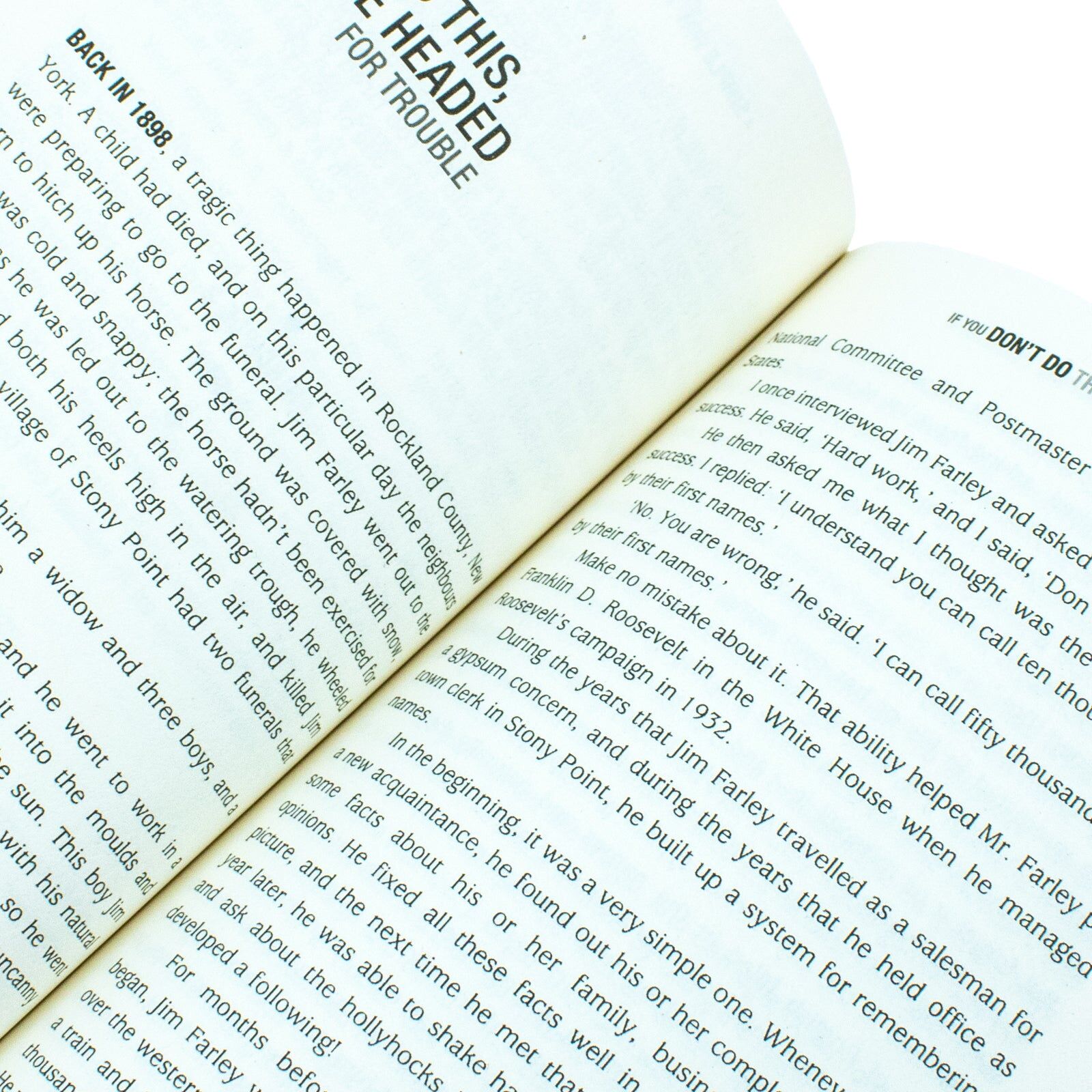
Wilco International LLP How to Win Friends and Influence People by Dale Carnegie Classic Self Help Book on Communication, Leadership, Confidence & Personal DevelopmentDiscover one of the world's best-known personal development books with How to Win Friends and Influence People by Dale Carnegie. First published in 1936, this enduring classic presents practical principles for communicating effectively, building positive relationships and working successfully with other people. Through memorable examples and straightforward advice, Carnegie explores how to make a positive impression, handle disagreements constructively, encourage cooperation and become a more effective communicator. The principles can be applied across everyday life, from personal relationships and social situations to business, management, sales, networking and leadership. Accessible and practical, How to Win Friends and Influence People remains popular with readers interested in improving their communication skills, confidence, interpersonal relationships and professional development. Key Features Classic personal development book by Dale Carnegie Practical principles for improving communication Explores relationships, leadership and interpersonal skills Useful for business, management, sales and networking Helps readers understand effective people skills Suitable for personal and professional development Excellent gift for entrepreneurs, managers and self-improvement readers9,99 £*Shipping: 2,99 £Secure redirect to the provider
-
How many dipeptides are formed from L-alanine and L-glycine?
When L-alanine and L-glycine combine, they form one dipeptide. This is because a dipeptide is composed of two amino acids linked together by a peptide bond. In this case, L-alanine and L-glycine combine to form the dipeptide Ala-Gly. **
-
Why doesn't glycine have D- and L-forms?
Glycine does not have D- and L-forms because it is the simplest amino acid and has a hydrogen atom as its side chain. Unlike other amino acids that have a chiral carbon atom in their side chains, glycine's side chain is not chiral, meaning it does not have a mirror image form. As a result, glycine does not have D- and L-forms like other amino acids. **
-
Does glycine affect the heart?
Yes, glycine can affect the heart. It is an amino acid that plays a role in the synthesis of proteins and is also involved in the production of collagen, which is important for the structure and function of the heart. Additionally, glycine has been studied for its potential benefits in protecting the heart from damage caused by various factors such as oxidative stress and inflammation. However, more research is needed to fully understand the impact of glycine on heart health. **
-
Why is glycine not significantly polar?
Glycine is not significantly polar because it is a small, non-polar amino acid with a hydrogen atom as its side chain. This side chain does not contain any charged or highly electronegative atoms like oxygen or nitrogen that would create a polar interaction. As a result, glycine does not readily participate in hydrogen bonding or other polar interactions, making it a non-polar molecule overall. **
Similar search terms for L-glycine
-
What is the electrical conductivity of glycine?
Glycine is a non-conductive amino acid, meaning it does not conduct electricity in its pure form. This is because it does not contain any free ions or electrons that can carry an electric current. However, when glycine is dissolved in water, it can form ions and become a conductor of electricity. This is due to the dissociation of glycine molecules into positively charged ions (cations) and negatively charged ions (anions) in the solution, allowing it to conduct electricity. **
-
What is the reaction equation between glycine and lysine?
The reaction equation between glycine and lysine involves the formation of a peptide bond. This reaction is a condensation reaction where the amino group of glycine (-NH2) reacts with the carboxyl group of lysine (-COOH) to form a peptide bond (-CONH-). The reaction results in the formation of a dipeptide composed of glycine and lysine linked together by the peptide bond. The general reaction equation for this process is: Glycine + Lysine → Glycine-Lysine + H2O. **
-
How to dose L-Arginine and L-Citrulline?
The dosing of L-Arginine and L-Citrulline can vary depending on individual needs and health conditions. However, a common dosing recommendation for L-Arginine is around 2-3 grams per day, while L-Citrulline is typically dosed at 3-6 grams per day. It is important to start with a lower dose and gradually increase it while monitoring for any potential side effects. Consulting with a healthcare provider or a nutritionist is recommended to determine the appropriate dosage for your specific needs. **
-
Why is glycine soluble in water but phenylalanine is not?
Glycine is soluble in water because it is a small, polar molecule with a simple structure, allowing it to form hydrogen bonds with water molecules. On the other hand, phenylalanine is a larger, nonpolar molecule with a hydrophobic phenyl group, which makes it less likely to interact with water molecules and therefore insoluble in water. The presence of the hydrophobic phenyl group in phenylalanine disrupts the molecule's ability to form hydrogen bonds with water, leading to its insolubility in water. **
* All prices are inclusive of VAT and, if applicable, plus shipping costs. The offer information is based on the details provided by the respective shop and is updated through automated processes. Real-time updates do not occur, so deviations can occur in individual cases. ** Note: Parts of this content were created by AI.