Buy rolemodel.eu ?
We are moving the project
rolemodel.eu .
Are you interested in purchasing the domain
rolemodel.eu ?
domain@kv-gmbh.de · 0541-91531010
Buy rolemodel.eu ?
What did Frederick II achieve?
Frederick II, also known as Frederick the Great, achieved several significant accomplishments during his reign as King of Prussia. He modernized the Prussian bureaucracy and legal system, implemented religious tolerance, and promoted education and the arts. Frederick II also expanded Prussia's territory through military conquests, most notably during the Silesian Wars. His reign is often remembered as a period of enlightenment and cultural flourishing in Prussia. **
How was Frederick the II enlightened?
Frederick the II was considered enlightened because he was a patron of the arts and sciences, promoting education and intellectual pursuits. He established the University of Halle and the Berlin Academy of Sciences, and he corresponded with leading philosophers such as Voltaire and Immanuel Kant. He also implemented legal and administrative reforms, promoting religious tolerance and freedom of speech. Additionally, he supported agricultural and economic development, and he was known for his interest in music and the arts. **


Similar search terms for Frederick
Top-Angebote
Products related to Frederick:
-
"SAFAVIEH Frederick 40-Inch Marble Console Table, Brown Grey and Black - 40"" W x 12"" D x 30"" H""Frederick Console Table: solid marble top, black iron frame and trumpet-flared legs The Frederick Console Table is a modern console table in brown grey / black. This marble console table measures 40"" W x 12"" D x 30"" H."193,99 $*Shipping: 0,00 $Secure redirect to the provider
-
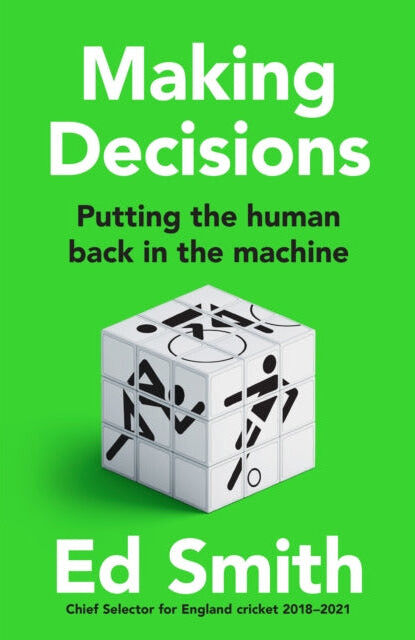
William Collins Making Decisions Book – Leadership, Judgement & Smart Thinking GuideWinning takes many forms. For fans of Matthew Syed, this is a great sports book about leadership, judgement and decision-making - rooted in the theory that helped Ed Smith lead England cricket to sustained success. And to help us all win more.'An absolutely fascinating book' THE GAME, The Times football pod How do you spot the opportunities that others miss?How do you turn a team's performance around?How do you make good decisions amid a tidal wave of information? And how can you improve? As chief selector for the England cricket team, Ed Smith pioneered new methods for building successful teams and watched his decisions tested in real time on the pitch. During his three-year tenure, England averaged 7 wins in every 10 completed matches, better than they have performed before or since. Making Decisions reveals Smith's unique approach to finding success in a fast-changing and increasingly data-reliant world.The best decisions, Smith argues, rely on a combination of differing kinds of intelligence: from algorithms to intuition. This is a truth that the most successful people know: data cannot account for everything, it must be harnessed with human insight. Whatever the power of data, humans aren't finished yet.Sharing for the first time the tools he introduced as England selector, Smith's book captures the immediacy of life at the sharp end, while also exploring frameworks from the top levels of sports, business and the arts. Decision-making is revealed as a creative enterprise, not a reductive system. Making Decisions offers an invaluable guide for those who want a better framework for developing, explaining and implementing new ideas.18,35 £*Shipping: 2,99 £Secure redirect to the provider
-
Wilco International LLP How to Win Friends and Influence People by Dale Carnegie Classic Self Help Book on Communication, Leadership, Confidence & Personal DevelopmentDiscover one of the world's best-known personal development books with How to Win Friends and Influence People by Dale Carnegie. First published in 1936, this enduring classic presents practical principles for communicating effectively, building positive relationships and working successfully with other people. Through memorable examples and straightforward advice, Carnegie explores how to make a positive impression, handle disagreements constructively, encourage cooperation and become a more effective communicator. The principles can be applied across everyday life, from personal relationships and social situations to business, management, sales, networking and leadership. Accessible and practical, How to Win Friends and Influence People remains popular with readers interested in improving their communication skills, confidence, interpersonal relationships and professional development. Key Features Classic personal development book by Dale Carnegie Practical principles for improving communication Explores relationships, leadership and interpersonal skills Useful for business, management, sales and networking Helps readers understand effective people skills Suitable for personal and professional development Excellent gift for entrepreneurs, managers and self-improvement readers9,99 £*Shipping: 2,99 £Secure redirect to the provider
-
Little Brown Book Group No Limits: Blow the Cap Off Your Capacity by John C. Maxwell – Personal Growth & Leadership Development GuideNo Limits: Blow the CAP Off Your Capacity Description We often treat the word capacity as if it were a natural law of limitation. Unfortunately; most of us are much more comfortable defining what we perceive is off limits rather than what's possible. Could it be that many people have allowed what they perceive as capacity to define them? Have they allowed their perception to limit their attitudes about their potential? In his newest book; John Maxwell identifies 17 core capacities. Some of these are abilities we all already possess; such as energy; creativity and leadership. Others are aspects of our lives controlled by our choices; like our attitudes; character; and intentionality. Maxwell examines each of these 17 capacities; and provides clear and actionable advice on how you can increase your potential in each. He will guide you on how to identify; grow; and apply your critical capacities to your daily life. Once you've blown the 'cap' off your capacities; you'll find yourself more successful--and fulfilled--in your daily life.5,99 £*Shipping: 2,99 £Secure redirect to the provider


-
Is the title Frederick the Great legitimate?
The title "Frederick the Great" is legitimate in the sense that it is a commonly used and recognized title for Frederick II of Prussia, who ruled from 1740 to 1786. He is often referred to as "Frederick the Great" due to his significant military and administrative reforms, as well as his role in expanding Prussia's power and influence in Europe. While the title may be seen as a subjective assessment of his reign, it is widely accepted and used in historical and academic contexts. **
-
Is Frederick the Great a Prussian tyrant?
Frederick the Great is often seen as a controversial figure in history. While he was known for his authoritarian rule and aggressive military campaigns, he also implemented significant reforms in Prussia, including religious tolerance and improvements in education and agriculture. Some historians view him as a tyrant due to his harsh treatment of his subjects and his expansionist policies, while others argue that he was a strong and effective ruler who modernized Prussia and contributed to its rise as a major European power. Ultimately, whether Frederick the Great is considered a tyrant depends on one's perspective and interpretation of his actions and legacy. **
-
Why is Frederick II called "the Great"?
Frederick II is called "the Great" because of his significant contributions to the cultural, political, and military development of Prussia and the wider region. He modernized the Prussian state, implemented administrative reforms, promoted religious tolerance, and supported the arts and sciences. Frederick II also expanded Prussia's territory through successful military campaigns, including the acquisition of Silesia. His leadership and accomplishments earned him the title of "the Great" and solidified his legacy as one of the most influential rulers in European history. **
-
What did Frederick the Great die of?
Frederick the Great, also known as Frederick II of Prussia, died of a stroke on August 17, 1786. He had been suffering from health issues for several years, including gout and other ailments, and his health had been declining. The stroke ultimately led to his death at the age of 74. **

Is Frederick the Great an enlightened monarch?
Frederick the Great is often considered an enlightened monarch due to his promotion of religious tolerance, support for the arts and sciences, and implementation of legal reforms. He corresponded with Enlightenment thinkers such as Voltaire and implemented policies aimed at improving the lives of his subjects. However, some historians argue that his military conquests and authoritarian rule contradict the ideals of the Enlightenment. Overall, while Frederick the Great made significant contributions to the advancement of Enlightenment ideals, the extent to which he can be considered an enlightened monarch is a matter of debate. **
How did Emperor Frederick II influence the coexistence and interaction of different cultures and religions?
Emperor Frederick II of the Holy Roman Empire was known for his policies promoting religious tolerance and cultural exchange. He encouraged the coexistence of different cultures and religions within his realm, particularly in Sicily, where he fostered a multicultural society that included Muslims, Christians, and Jews. Frederick II's court was a center of learning and intellectual exchange, where scholars from different backgrounds could come together to share knowledge and ideas. His policies and patronage of the arts also contributed to the blending of different cultural and religious traditions, creating a unique and diverse society in his domains. **
Top-Angebote
Products related to Frederick:
-
Corgi Frederick Forsyth 8 Books Collection Set – The Odessa File, Day of the Jackal & Thriller CollectionThe Cobra The Cocaine industry is worth billions of dollars a year to the drug cartels who spread their evil seed across Western society. Its usage causes incalculable misery, poverty and death. The Odessa File It's 1963 and a young German reporter has been assigned the suicide of a holocaust survivor. The news story seems straighforward, this is a tragic insight into one man's suffering. The Day of the Jackal It is 1963 and an anonymous Englishman has been hired by the Operations Chief of the O.A.S. to murder General de Galle. The Kill List THE KILL LIST:The names of those men and women who would threaten the world’s security – held above top secret at the highest level of the US government. The Dogs Of War An astonishing discovery is made in the remote African republic of Zangaro, one which could change the course of a nation's history forever. Avenger A young American aid volunteer, Ricky Colenso, is brutally murdered in former Yugoslavia. His grandfather, the Canadian billionaire Steven Edmond, is bent on revenge. The Fox Most weapons do what you tell them. Most weapons you can control.But what if the most dangerous weapon in the world isn't a smart missile or a stealth submarine or even an AI computer programme? The Fourth Protocol Plan Aurora, hatched in a remote dacha in the forest outside Moscow and initiated with relentless brilliance and skill, is a plan within a plan that, in its spine-chilling ingenuity.21,85 £*Shipping: 2,99 £Secure redirect to the provider
-
Belfry Bathroom Frederick Solid Oak 1000mm Free-Standing Vanity Unit with Basin & Faucet Oak 1,000mm WThis product is a designer handcrafted beautiful solid oak vanity unit with a two-door useful cupboard with a height adjustable or removable middle shelf; this unit also features three top drawers for further storage. The central drawer has been adapted to help house the waste so that it can still function as a drawer when utilised as a bathroom vanity unit. Belfry Bathroom669,99 £*Shipping: 14,99 £Secure redirect to the provider
-
"SAFAVIEH Frederick 40-Inch Marble Console Table, Brown Grey and Black - 40"" W x 12"" D x 30"" H""Frederick Console Table: solid marble top, black iron frame and trumpet-flared legs The Frederick Console Table is a modern console table in brown grey / black. This marble console table measures 40"" W x 12"" D x 30"" H."193,99 $*Shipping: 0,00 $Secure redirect to the provider
-
William Collins Making Decisions Book – Leadership, Judgement & Smart Thinking GuideWinning takes many forms. For fans of Matthew Syed, this is a great sports book about leadership, judgement and decision-making - rooted in the theory that helped Ed Smith lead England cricket to sustained success. And to help us all win more.'An absolutely fascinating book' THE GAME, The Times football pod How do you spot the opportunities that others miss?How do you turn a team's performance around?How do you make good decisions amid a tidal wave of information? And how can you improve? As chief selector for the England cricket team, Ed Smith pioneered new methods for building successful teams and watched his decisions tested in real time on the pitch. During his three-year tenure, England averaged 7 wins in every 10 completed matches, better than they have performed before or since. Making Decisions reveals Smith's unique approach to finding success in a fast-changing and increasingly data-reliant world.The best decisions, Smith argues, rely on a combination of differing kinds of intelligence: from algorithms to intuition. This is a truth that the most successful people know: data cannot account for everything, it must be harnessed with human insight. Whatever the power of data, humans aren't finished yet.Sharing for the first time the tools he introduced as England selector, Smith's book captures the immediacy of life at the sharp end, while also exploring frameworks from the top levels of sports, business and the arts. Decision-making is revealed as a creative enterprise, not a reductive system. Making Decisions offers an invaluable guide for those who want a better framework for developing, explaining and implementing new ideas.18,35 £*Shipping: 2,99 £Secure redirect to the provider
-
What did Frederick II achieve?
Frederick II, also known as Frederick the Great, achieved several significant accomplishments during his reign as King of Prussia. He modernized the Prussian bureaucracy and legal system, implemented religious tolerance, and promoted education and the arts. Frederick II also expanded Prussia's territory through military conquests, most notably during the Silesian Wars. His reign is often remembered as a period of enlightenment and cultural flourishing in Prussia. **
-
How was Frederick the II enlightened?
Frederick the II was considered enlightened because he was a patron of the arts and sciences, promoting education and intellectual pursuits. He established the University of Halle and the Berlin Academy of Sciences, and he corresponded with leading philosophers such as Voltaire and Immanuel Kant. He also implemented legal and administrative reforms, promoting religious tolerance and freedom of speech. Additionally, he supported agricultural and economic development, and he was known for his interest in music and the arts. **
-
Is the title Frederick the Great legitimate?
The title "Frederick the Great" is legitimate in the sense that it is a commonly used and recognized title for Frederick II of Prussia, who ruled from 1740 to 1786. He is often referred to as "Frederick the Great" due to his significant military and administrative reforms, as well as his role in expanding Prussia's power and influence in Europe. While the title may be seen as a subjective assessment of his reign, it is widely accepted and used in historical and academic contexts. **
-
Is Frederick the Great a Prussian tyrant?
Frederick the Great is often seen as a controversial figure in history. While he was known for his authoritarian rule and aggressive military campaigns, he also implemented significant reforms in Prussia, including religious tolerance and improvements in education and agriculture. Some historians view him as a tyrant due to his harsh treatment of his subjects and his expansionist policies, while others argue that he was a strong and effective ruler who modernized Prussia and contributed to its rise as a major European power. Ultimately, whether Frederick the Great is considered a tyrant depends on one's perspective and interpretation of his actions and legacy. **
Similar search terms for Frederick
-
Wilco International LLP How to Win Friends and Influence People by Dale Carnegie Classic Self Help Book on Communication, Leadership, Confidence & Personal DevelopmentDiscover one of the world's best-known personal development books with How to Win Friends and Influence People by Dale Carnegie. First published in 1936, this enduring classic presents practical principles for communicating effectively, building positive relationships and working successfully with other people. Through memorable examples and straightforward advice, Carnegie explores how to make a positive impression, handle disagreements constructively, encourage cooperation and become a more effective communicator. The principles can be applied across everyday life, from personal relationships and social situations to business, management, sales, networking and leadership. Accessible and practical, How to Win Friends and Influence People remains popular with readers interested in improving their communication skills, confidence, interpersonal relationships and professional development. Key Features Classic personal development book by Dale Carnegie Practical principles for improving communication Explores relationships, leadership and interpersonal skills Useful for business, management, sales and networking Helps readers understand effective people skills Suitable for personal and professional development Excellent gift for entrepreneurs, managers and self-improvement readers9,99 £*Shipping: 2,99 £Secure redirect to the provider
-
Little Brown Book Group No Limits: Blow the Cap Off Your Capacity by John C. Maxwell – Personal Growth & Leadership Development GuideNo Limits: Blow the CAP Off Your Capacity Description We often treat the word capacity as if it were a natural law of limitation. Unfortunately; most of us are much more comfortable defining what we perceive is off limits rather than what's possible. Could it be that many people have allowed what they perceive as capacity to define them? Have they allowed their perception to limit their attitudes about their potential? In his newest book; John Maxwell identifies 17 core capacities. Some of these are abilities we all already possess; such as energy; creativity and leadership. Others are aspects of our lives controlled by our choices; like our attitudes; character; and intentionality. Maxwell examines each of these 17 capacities; and provides clear and actionable advice on how you can increase your potential in each. He will guide you on how to identify; grow; and apply your critical capacities to your daily life. Once you've blown the 'cap' off your capacities; you'll find yourself more successful--and fulfilled--in your daily life.5,99 £*Shipping: 2,99 £Secure redirect to the provider
-
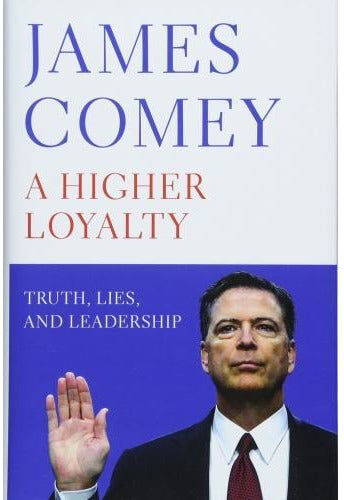
MACMILLAN A Higher Loyalty - Truth Lies And LeadershipA Higher Loyalty: Truth, Lies, and Leadership In his Number One bestselling memoir, former FBI director James Comey shares his never-before-told experiences from some of the highest-stakes situations of his career in the past two decades of American government, exploring what good, ethical leadership looks like, and how it drives sound decisions. His journey provides an unprecedented entry into the corridors of power, and a remarkable lesson in what makes an effective leader. Mr. Comey served as director of the FBI from 2013 to 2017, appointed to the post by President Barack Obama. He previously served as U.S. attorney for the Southern District of New York, and the U.S. deputy attorney general in the administration of President George W. Bush. From prosecuting the Mafia and Martha Stewart to helping change the Bush administration's policies on torture and electronic surveillance, overseeing the Hillary Clinton e-mail investigation as well as ties between the Trump campaign and Russia, Comey has been involved in some of the most consequential cases and policies of recent history.5,99 £*Shipping: 2,99 £Secure redirect to the provider
-
Piatkus Fierce Leadership By Susan Scott Fierce ConversationsFierce Leadership By Susan Scott Fierce Conversations For years, these mantras have been blindly adopted by business leaders everywhere but, as Susan Scott shows, these so-called best practices are ineffectual, cost companies vast sums and drive away the most valuable employees and customers. Yet they are so deeply ingrained in our organisational culture that no one has questioned them, until now. Informed by over a decade of research and work with CEOs and senior executives of the world's leading companies, Susan Scott reveals why these established practices are so wrongheaded and shows you how to spot the signs that you are falling prey to them and why they are adversely affecting your business. She then, in her direct, no-nonsense style, suggests a series of surprising and smart alternatives that you should put in their place.1,99 £*Shipping: 1,99 £Secure redirect to the provider
-
Why is Frederick II called "the Great"?
Frederick II is called "the Great" because of his significant contributions to the cultural, political, and military development of Prussia and the wider region. He modernized the Prussian state, implemented administrative reforms, promoted religious tolerance, and supported the arts and sciences. Frederick II also expanded Prussia's territory through successful military campaigns, including the acquisition of Silesia. His leadership and accomplishments earned him the title of "the Great" and solidified his legacy as one of the most influential rulers in European history. **
-
What did Frederick the Great die of?
Frederick the Great, also known as Frederick II of Prussia, died of a stroke on August 17, 1786. He had been suffering from health issues for several years, including gout and other ailments, and his health had been declining. The stroke ultimately led to his death at the age of 74. **
-
Is Frederick the Great an enlightened monarch?
Frederick the Great is often considered an enlightened monarch due to his promotion of religious tolerance, support for the arts and sciences, and implementation of legal reforms. He corresponded with Enlightenment thinkers such as Voltaire and implemented policies aimed at improving the lives of his subjects. However, some historians argue that his military conquests and authoritarian rule contradict the ideals of the Enlightenment. Overall, while Frederick the Great made significant contributions to the advancement of Enlightenment ideals, the extent to which he can be considered an enlightened monarch is a matter of debate. **
-
How did Emperor Frederick II influence the coexistence and interaction of different cultures and religions?
Emperor Frederick II of the Holy Roman Empire was known for his policies promoting religious tolerance and cultural exchange. He encouraged the coexistence of different cultures and religions within his realm, particularly in Sicily, where he fostered a multicultural society that included Muslims, Christians, and Jews. Frederick II's court was a center of learning and intellectual exchange, where scholars from different backgrounds could come together to share knowledge and ideas. His policies and patronage of the arts also contributed to the blending of different cultural and religious traditions, creating a unique and diverse society in his domains. **
* All prices are inclusive of VAT and, if applicable, plus shipping costs. The offer information is based on the details provided by the respective shop and is updated through automated processes. Real-time updates do not occur, so deviations can occur in individual cases. ** Note: Parts of this content were created by AI.