Buy rolemodel.eu ?
We are moving the project
rolemodel.eu .
Are you interested in purchasing the domain
rolemodel.eu ?
domain@kv-gmbh.de · 0541-91531010
Buy rolemodel.eu ?
When are forests considered to be sparse forests?
Forests are considered to be sparse when the density of trees and vegetation is low, with significant gaps between individual trees and less overall coverage. This can be due to factors such as poor soil quality, limited water availability, or natural disturbances like wildfires or insect infestations. Sparse forests may also result from human activities such as logging or land clearing. In these areas, the canopy cover is less dense, allowing more light to reach the forest floor and creating a different ecological environment compared to denser forests. **
How do monoculture forests differ from natural mixed forests?
Monoculture forests are composed of a single species of tree, typically planted in rows for commercial purposes such as timber production. These forests lack the diversity of species found in natural mixed forests, which contain a variety of tree species, as well as other plants and wildlife. Natural mixed forests are more resilient to pests, diseases, and climate change, as the diversity of species provides a more stable ecosystem. Monoculture forests are more vulnerable to these threats, as a single pest or disease can devastate the entire forest. **


Similar search terms for Forests
Top-Angebote
Products related to Forests:
-
Wilco International LLP How to Win Friends and Influence People by Dale Carnegie Classic Self Help Book on Communication, Leadership, Confidence & Personal DevelopmentDiscover one of the world's best-known personal development books with How to Win Friends and Influence People by Dale Carnegie. First published in 1936, this enduring classic presents practical principles for communicating effectively, building positive relationships and working successfully with other people. Through memorable examples and straightforward advice, Carnegie explores how to make a positive impression, handle disagreements constructively, encourage cooperation and become a more effective communicator. The principles can be applied across everyday life, from personal relationships and social situations to business, management, sales, networking and leadership. Accessible and practical, How to Win Friends and Influence People remains popular with readers interested in improving their communication skills, confidence, interpersonal relationships and professional development. Key Features Classic personal development book by Dale Carnegie Practical principles for improving communication Explores relationships, leadership and interpersonal skills Useful for business, management, sales and networking Helps readers understand effective people skills Suitable for personal and professional development Excellent gift for entrepreneurs, managers and self-improvement readers9,99 £*Shipping: 2,99 £Secure redirect to the provider
-
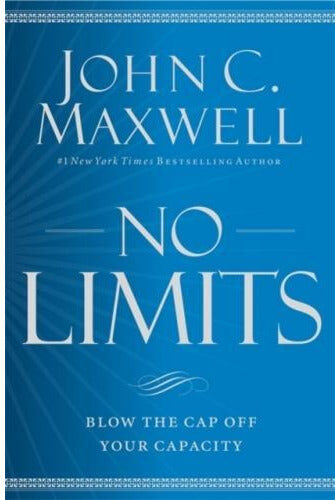
Little Brown Book Group No Limits: Blow the Cap Off Your Capacity by John C. Maxwell – Personal Growth & Leadership Development GuideNo Limits: Blow the CAP Off Your Capacity Description We often treat the word capacity as if it were a natural law of limitation. Unfortunately; most of us are much more comfortable defining what we perceive is off limits rather than what's possible. Could it be that many people have allowed what they perceive as capacity to define them? Have they allowed their perception to limit their attitudes about their potential? In his newest book; John Maxwell identifies 17 core capacities. Some of these are abilities we all already possess; such as energy; creativity and leadership. Others are aspects of our lives controlled by our choices; like our attitudes; character; and intentionality. Maxwell examines each of these 17 capacities; and provides clear and actionable advice on how you can increase your potential in each. He will guide you on how to identify; grow; and apply your critical capacities to your daily life. Once you've blown the 'cap' off your capacities; you'll find yourself more successful--and fulfilled--in your daily life.5,99 £*Shipping: 2,99 £Secure redirect to the provider
-
Will our forests survive?
The survival of our forests depends on the actions we take to protect and preserve them. Deforestation, climate change, and unsustainable logging practices are major threats to our forests. By implementing sustainable forest management practices, protecting biodiversity, and combating climate change, we can help ensure the survival of our forests for future generations. It is crucial that we prioritize conservation efforts and work together to protect these vital ecosystems. **
-
How does the pH value differ in coniferous forests and deciduous forests?
The pH value in coniferous forests tends to be more acidic, typically ranging from 4.5 to 6.0, due to the accumulation of acidic needles and organic matter from the trees. In contrast, the pH value in deciduous forests is generally more neutral, ranging from 6.0 to 7.5, as the fallen leaves and organic matter from deciduous trees tend to have a less acidic impact on the soil. This difference in pH levels can affect the types of plants and organisms that thrive in each type of forest ecosystem. **
-
What are forests in biology?
Forests are large areas of land dominated by trees and other woody vegetation. In biology, forests are important ecosystems that support a wide variety of plant and animal species. They play a crucial role in regulating the Earth's climate, as they absorb carbon dioxide and release oxygen through the process of photosynthesis. Forests also provide numerous ecosystem services, such as water purification, soil stabilization, and habitat for wildlife. **
-
Who is afraid of forests?
Many people have a fear of forests, known as sylvaphobia. This fear can stem from a variety of reasons, including the fear of getting lost, encountering wild animals, or the feeling of being surrounded by dense, unfamiliar vegetation. Additionally, some people may have a fear of the unknown or a general sense of unease in natural, isolated environments. Overall, the fear of forests can be attributed to a combination of personal experiences, cultural influences, and individual perceptions of the natural world. **
What's new in the forests?
In the forests, there are always new developments and changes happening. Some of the recent updates include the growth of new vegetation as the seasons change, the arrival of migratory birds and animals, and the ongoing cycle of decay and regeneration. Additionally, there may be changes in the forest ecosystem due to natural disturbances such as wildfires or human activities. Overall, the forests are dynamic environments with constantly evolving conditions and new occurrences. **
Does Brazil protect its forests?
Yes, Brazil has implemented various measures to protect its forests. The country has established a network of protected areas, including national parks and reserves, to conserve its rich biodiversity. Additionally, Brazil has implemented policies to combat deforestation, such as monitoring and enforcement efforts to prevent illegal logging and land clearing. However, deforestation remains a significant issue in Brazil, particularly in the Amazon rainforest, and the country continues to face challenges in effectively protecting its forests. **
Top-Angebote
Products related to Forests:
-
Uplifted Finds Forests Familys Animal Figure With Movable Limbs And Phone Stand Holder dogAdd a touch of whimsical charm to your workspace with this adorable Forests Familys animal figure. Standing at 21cm, this multifunctional ornament is designed with movable limbs, allowing you to pose your favorite character in various cute...79,97 $*Shipping: 0,00 $Secure redirect to the provider
-
William Collins Making Decisions Book – Leadership, Judgement & Smart Thinking GuideWinning takes many forms. For fans of Matthew Syed, this is a great sports book about leadership, judgement and decision-making - rooted in the theory that helped Ed Smith lead England cricket to sustained success. And to help us all win more.'An absolutely fascinating book' THE GAME, The Times football pod How do you spot the opportunities that others miss?How do you turn a team's performance around?How do you make good decisions amid a tidal wave of information? And how can you improve? As chief selector for the England cricket team, Ed Smith pioneered new methods for building successful teams and watched his decisions tested in real time on the pitch. During his three-year tenure, England averaged 7 wins in every 10 completed matches, better than they have performed before or since. Making Decisions reveals Smith's unique approach to finding success in a fast-changing and increasingly data-reliant world.The best decisions, Smith argues, rely on a combination of differing kinds of intelligence: from algorithms to intuition. This is a truth that the most successful people know: data cannot account for everything, it must be harnessed with human insight. Whatever the power of data, humans aren't finished yet.Sharing for the first time the tools he introduced as England selector, Smith's book captures the immediacy of life at the sharp end, while also exploring frameworks from the top levels of sports, business and the arts. Decision-making is revealed as a creative enterprise, not a reductive system. Making Decisions offers an invaluable guide for those who want a better framework for developing, explaining and implementing new ideas.18,35 £*Shipping: 2,99 £Secure redirect to the provider
-
Wilco International LLP How to Win Friends and Influence People by Dale Carnegie Classic Self Help Book on Communication, Leadership, Confidence & Personal DevelopmentDiscover one of the world's best-known personal development books with How to Win Friends and Influence People by Dale Carnegie. First published in 1936, this enduring classic presents practical principles for communicating effectively, building positive relationships and working successfully with other people. Through memorable examples and straightforward advice, Carnegie explores how to make a positive impression, handle disagreements constructively, encourage cooperation and become a more effective communicator. The principles can be applied across everyday life, from personal relationships and social situations to business, management, sales, networking and leadership. Accessible and practical, How to Win Friends and Influence People remains popular with readers interested in improving their communication skills, confidence, interpersonal relationships and professional development. Key Features Classic personal development book by Dale Carnegie Practical principles for improving communication Explores relationships, leadership and interpersonal skills Useful for business, management, sales and networking Helps readers understand effective people skills Suitable for personal and professional development Excellent gift for entrepreneurs, managers and self-improvement readers9,99 £*Shipping: 2,99 £Secure redirect to the provider
-
Little Brown Book Group No Limits: Blow the Cap Off Your Capacity by John C. Maxwell – Personal Growth & Leadership Development GuideNo Limits: Blow the CAP Off Your Capacity Description We often treat the word capacity as if it were a natural law of limitation. Unfortunately; most of us are much more comfortable defining what we perceive is off limits rather than what's possible. Could it be that many people have allowed what they perceive as capacity to define them? Have they allowed their perception to limit their attitudes about their potential? In his newest book; John Maxwell identifies 17 core capacities. Some of these are abilities we all already possess; such as energy; creativity and leadership. Others are aspects of our lives controlled by our choices; like our attitudes; character; and intentionality. Maxwell examines each of these 17 capacities; and provides clear and actionable advice on how you can increase your potential in each. He will guide you on how to identify; grow; and apply your critical capacities to your daily life. Once you've blown the 'cap' off your capacities; you'll find yourself more successful--and fulfilled--in your daily life.5,99 £*Shipping: 2,99 £Secure redirect to the provider
-
When are forests considered to be sparse forests?
Forests are considered to be sparse when the density of trees and vegetation is low, with significant gaps between individual trees and less overall coverage. This can be due to factors such as poor soil quality, limited water availability, or natural disturbances like wildfires or insect infestations. Sparse forests may also result from human activities such as logging or land clearing. In these areas, the canopy cover is less dense, allowing more light to reach the forest floor and creating a different ecological environment compared to denser forests. **
-
How do monoculture forests differ from natural mixed forests?
Monoculture forests are composed of a single species of tree, typically planted in rows for commercial purposes such as timber production. These forests lack the diversity of species found in natural mixed forests, which contain a variety of tree species, as well as other plants and wildlife. Natural mixed forests are more resilient to pests, diseases, and climate change, as the diversity of species provides a more stable ecosystem. Monoculture forests are more vulnerable to these threats, as a single pest or disease can devastate the entire forest. **
-
Will our forests survive?
The survival of our forests depends on the actions we take to protect and preserve them. Deforestation, climate change, and unsustainable logging practices are major threats to our forests. By implementing sustainable forest management practices, protecting biodiversity, and combating climate change, we can help ensure the survival of our forests for future generations. It is crucial that we prioritize conservation efforts and work together to protect these vital ecosystems. **
-
How does the pH value differ in coniferous forests and deciduous forests?
The pH value in coniferous forests tends to be more acidic, typically ranging from 4.5 to 6.0, due to the accumulation of acidic needles and organic matter from the trees. In contrast, the pH value in deciduous forests is generally more neutral, ranging from 6.0 to 7.5, as the fallen leaves and organic matter from deciduous trees tend to have a less acidic impact on the soil. This difference in pH levels can affect the types of plants and organisms that thrive in each type of forest ecosystem. **
Similar search terms for Forests
-
What are forests in biology?
Forests are large areas of land dominated by trees and other woody vegetation. In biology, forests are important ecosystems that support a wide variety of plant and animal species. They play a crucial role in regulating the Earth's climate, as they absorb carbon dioxide and release oxygen through the process of photosynthesis. Forests also provide numerous ecosystem services, such as water purification, soil stabilization, and habitat for wildlife. **
-
Who is afraid of forests?
Many people have a fear of forests, known as sylvaphobia. This fear can stem from a variety of reasons, including the fear of getting lost, encountering wild animals, or the feeling of being surrounded by dense, unfamiliar vegetation. Additionally, some people may have a fear of the unknown or a general sense of unease in natural, isolated environments. Overall, the fear of forests can be attributed to a combination of personal experiences, cultural influences, and individual perceptions of the natural world. **
-
What's new in the forests?
In the forests, there are always new developments and changes happening. Some of the recent updates include the growth of new vegetation as the seasons change, the arrival of migratory birds and animals, and the ongoing cycle of decay and regeneration. Additionally, there may be changes in the forest ecosystem due to natural disturbances such as wildfires or human activities. Overall, the forests are dynamic environments with constantly evolving conditions and new occurrences. **
-
Does Brazil protect its forests?
Yes, Brazil has implemented various measures to protect its forests. The country has established a network of protected areas, including national parks and reserves, to conserve its rich biodiversity. Additionally, Brazil has implemented policies to combat deforestation, such as monitoring and enforcement efforts to prevent illegal logging and land clearing. However, deforestation remains a significant issue in Brazil, particularly in the Amazon rainforest, and the country continues to face challenges in effectively protecting its forests. **
* All prices are inclusive of VAT and, if applicable, plus shipping costs. The offer information is based on the details provided by the respective shop and is updated through automated processes. Real-time updates do not occur, so deviations can occur in individual cases. ** Note: Parts of this content were created by AI.