Buy rolemodel.eu ?
We are moving the project
rolemodel.eu .
Are you interested in purchasing the domain
rolemodel.eu ?
domain@kv-gmbh.de · 0541-91531010
Buy rolemodel.eu ?
Can someone explain Sigmund Freud's Tripartite Model with an example?
Sigmund Freud's Tripartite Model of the mind consists of three parts: the id, ego, and superego. The id represents our primal instincts and desires, seeking immediate gratification. The ego acts as the rational mediator between the id and the superego, balancing our desires with societal norms. The superego represents our internalized moral standards and values. For example, imagine a person who is craving a piece of cake (id), but knows they are on a diet and should resist the temptation (superego). The ego would then find a compromise, perhaps allowing a small piece of cake as a treat. **
Can someone explain Sigmund Freud's Tripartite Model using an example?
Sigmund Freud's Tripartite Model consists of three parts: the id, ego, and superego. The id is the primitive and instinctual part of the mind that operates on the pleasure principle, seeking immediate gratification. The ego is the rational part of the mind that balances the desires of the id with the constraints of reality. The superego represents the moral and ethical standards internalized from society and parents. An example to illustrate this model could be a person deciding whether to cheat on a test. The id might urge the person to cheat in order to achieve immediate success and gratification. The ego would weigh the consequences of cheating, such as getting caught and facing disciplinary action. The superego would come into play by reminding the person of the moral values against cheating and the importance of honesty. **


Similar search terms for Explain
Top-Angebote
Products related to Explain:
-
Counterart Absorbent Stone Coasters - Santa Can Explain - Set of 4 - 4x4x271Absorbent stone coaster with decorative print. Durable stoneware construction allows for continuous absorption of condensation. Made in the USA. Cork backing protects tabletops. Set of 4.25,99 $*Shipping: 0,00 $Secure redirect to the provider
-
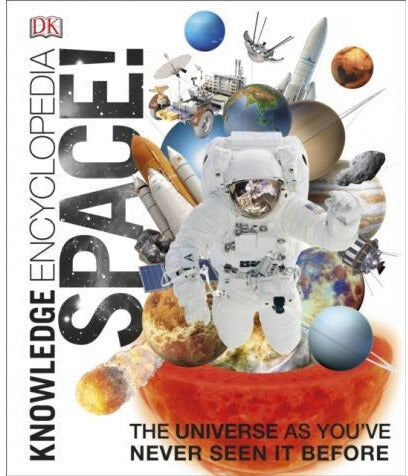
Dorling Kindersley DK Knowledge Encyclopedia Space The Ultimate Space & Astronomy Reference Guide for Kids and Families - Planets, Stars, Galaxies & the Universe ExplainExplore the wonders of the universe with the DK Knowledge Encyclopedia Space, an inspiring and visually stunning guide to outer space.Packed with high-definition photographs, 3D illustrations, infographics, facts, timelines, and scientific explanations, this encyclopedia takes readers on an unforgettable journey from Earth to the farthest reaches of the cosmos. Perfect for curious readers, young astronomers, and space enthusiasts, this book explains: The solar system, planets, moons, and dwarf planets Stars, nebulas, black holes, galaxies & cosmic phenomena Space exploration, astronauts & spacecraft The Big Bang, universe evolution & future missions The latest science discoveries explained in kid-friendly language A brilliant educational book for STEM learners, classrooms, home libraries, and children aged 8–14 who love space.9,99 £*Shipping: 2,99 £Secure redirect to the provider
-
Northwest Warner Brothers Scooby Doo Santa I Can Explain Silk Touch Throw Blanket"Snuggle up Holiday style with this super fun Scooby Doo ""Santa I Can Explain"" Silk Touch Throw Blanket. Made from 100% polyester, this blanket features a soft and warm fabric that's perfect for keeping you cozy and comfortable."39,99 $*Shipping: 0,00 $Secure redirect to the provider
-
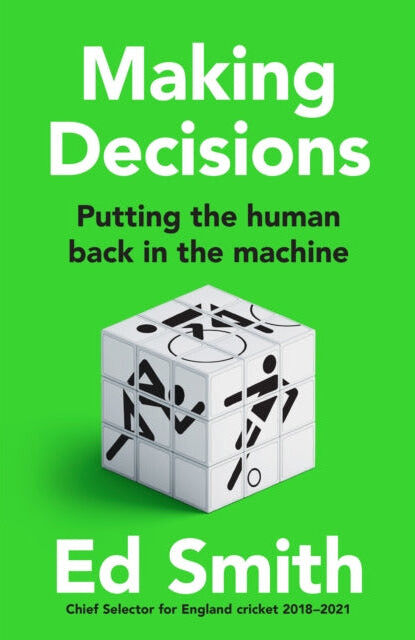
William Collins Making Decisions Book – Leadership, Judgement & Smart Thinking GuideWinning takes many forms. For fans of Matthew Syed, this is a great sports book about leadership, judgement and decision-making - rooted in the theory that helped Ed Smith lead England cricket to sustained success. And to help us all win more.'An absolutely fascinating book' THE GAME, The Times football pod How do you spot the opportunities that others miss?How do you turn a team's performance around?How do you make good decisions amid a tidal wave of information? And how can you improve? As chief selector for the England cricket team, Ed Smith pioneered new methods for building successful teams and watched his decisions tested in real time on the pitch. During his three-year tenure, England averaged 7 wins in every 10 completed matches, better than they have performed before or since. Making Decisions reveals Smith's unique approach to finding success in a fast-changing and increasingly data-reliant world.The best decisions, Smith argues, rely on a combination of differing kinds of intelligence: from algorithms to intuition. This is a truth that the most successful people know: data cannot account for everything, it must be harnessed with human insight. Whatever the power of data, humans aren't finished yet.Sharing for the first time the tools he introduced as England selector, Smith's book captures the immediacy of life at the sharp end, while also exploring frameworks from the top levels of sports, business and the arts. Decision-making is revealed as a creative enterprise, not a reductive system. Making Decisions offers an invaluable guide for those who want a better framework for developing, explaining and implementing new ideas.18,35 £*Shipping: 2,99 £Secure redirect to the provider


-
Can you explain the orbital model using carbon as an example?
The orbital model describes the arrangement of electrons in an atom. In the case of carbon, it has 6 electrons, with 2 in the first energy level and 4 in the second energy level. These electrons are arranged in orbitals, which are regions of space where electrons are likely to be found. The first energy level has one s orbital, while the second energy level has one s orbital and three p orbitals. The arrangement of these orbitals and the electrons within them determines the chemical behavior of carbon. **
-
How do I explain to my mentor the bad grades?
When explaining your bad grades to your mentor, it's important to be honest and take responsibility for your performance. You can explain any challenges or obstacles you faced that may have contributed to the grades, such as personal issues, health concerns, or difficulty adjusting to a new learning environment. Additionally, you can discuss the steps you are taking to improve your grades, such as seeking extra help, creating a study schedule, or addressing any underlying issues that may be impacting your academic performance. It's important to show your mentor that you are committed to making positive changes and are open to their guidance and support. **
-
Who can explain the two leadership styles to me?
A leadership expert or consultant would be able to explain the two leadership styles to you in detail. They can provide insights into the characteristics, strengths, and weaknesses of each style, as well as guidance on when to use them effectively. Additionally, mentors or experienced leaders who have practical knowledge and experience with these styles can also offer valuable explanations and examples to help you understand them better. **
-
Can you explain the limitations of the particle model using an example?
The particle model has limitations when it comes to explaining the behavior of light. For example, the particle model suggests that light travels in straight lines, but this does not explain phenomena such as diffraction and interference. These phenomena can only be explained by the wave model of light. Therefore, the particle model has limitations in fully describing the behavior of light and other wave-like phenomena. **


Can you explain the temperature influence on enzyme activity using the example of pyruvate kinase?
Temperature can greatly influence enzyme activity, including that of pyruvate kinase. Pyruvate kinase is an enzyme involved in glycolysis, the process that converts glucose into energy. As temperature increases, so does the rate of enzyme activity, up to a certain point called the optimal temperature. Beyond this optimal temperature, the enzyme's structure can become denatured, leading to a decrease in activity. Therefore, maintaining an optimal temperature is crucial for maximizing pyruvate kinase activity and overall metabolic efficiency. **
What does central authority and authoritarian leadership mean?
Central authority refers to a system where power and decision-making are concentrated in a single entity or group, such as a government or leader. Authoritarian leadership is a style of leadership where the leader holds all the power and makes decisions without input from others. In an authoritarian system, there is little to no room for dissent or opposition, and individuals are expected to follow orders without question. **
Top-Angebote
Products related to Explain:
-
Sister's Aroma Don't Explain EDP U 50 mlSister's Aroma Don't Explain, 50 ml, Eaux de Parfum unisex, Surround yourself with a fragrance that suits you perfectly and becomes your new signature. Sister's Aroma Don't Explain unisex Eau de Parfum will win you over from the first sniff and never cease to surprise you. a fragrance that appeals to those who love original and fresh compositions34,50 £*Shipping: 3,99 £Secure redirect to the provider
-
Sister's Aroma Don't Explain EDP U 10 mlSister's Aroma Don't Explain, 10 ml, Eaux de Parfum unisex, Surround yourself with a fragrance that suits you perfectly and becomes your new signature. Sister's Aroma Don't Explain unisex Eau de Parfum will win you over from the first sniff and never cease to surprise you. a fragrance that appeals to those who love original and fresh compositions12,08 £*Shipping: 3,99 £Secure redirect to the provider
-
Counterart Absorbent Stone Coasters - Santa Can Explain - Set of 4 - 4x4x271Absorbent stone coaster with decorative print. Durable stoneware construction allows for continuous absorption of condensation. Made in the USA. Cork backing protects tabletops. Set of 4.25,99 $*Shipping: 0,00 $Secure redirect to the provider
-
Dorling Kindersley DK Knowledge Encyclopedia Space The Ultimate Space & Astronomy Reference Guide for Kids and Families - Planets, Stars, Galaxies & the Universe ExplainExplore the wonders of the universe with the DK Knowledge Encyclopedia Space, an inspiring and visually stunning guide to outer space.Packed with high-definition photographs, 3D illustrations, infographics, facts, timelines, and scientific explanations, this encyclopedia takes readers on an unforgettable journey from Earth to the farthest reaches of the cosmos. Perfect for curious readers, young astronomers, and space enthusiasts, this book explains: The solar system, planets, moons, and dwarf planets Stars, nebulas, black holes, galaxies & cosmic phenomena Space exploration, astronauts & spacecraft The Big Bang, universe evolution & future missions The latest science discoveries explained in kid-friendly language A brilliant educational book for STEM learners, classrooms, home libraries, and children aged 8–14 who love space.9,99 £*Shipping: 2,99 £Secure redirect to the provider
-
Can someone explain Sigmund Freud's Tripartite Model with an example?
Sigmund Freud's Tripartite Model of the mind consists of three parts: the id, ego, and superego. The id represents our primal instincts and desires, seeking immediate gratification. The ego acts as the rational mediator between the id and the superego, balancing our desires with societal norms. The superego represents our internalized moral standards and values. For example, imagine a person who is craving a piece of cake (id), but knows they are on a diet and should resist the temptation (superego). The ego would then find a compromise, perhaps allowing a small piece of cake as a treat. **
-
Can someone explain Sigmund Freud's Tripartite Model using an example?
Sigmund Freud's Tripartite Model consists of three parts: the id, ego, and superego. The id is the primitive and instinctual part of the mind that operates on the pleasure principle, seeking immediate gratification. The ego is the rational part of the mind that balances the desires of the id with the constraints of reality. The superego represents the moral and ethical standards internalized from society and parents. An example to illustrate this model could be a person deciding whether to cheat on a test. The id might urge the person to cheat in order to achieve immediate success and gratification. The ego would weigh the consequences of cheating, such as getting caught and facing disciplinary action. The superego would come into play by reminding the person of the moral values against cheating and the importance of honesty. **
-
Can you explain the orbital model using carbon as an example?
The orbital model describes the arrangement of electrons in an atom. In the case of carbon, it has 6 electrons, with 2 in the first energy level and 4 in the second energy level. These electrons are arranged in orbitals, which are regions of space where electrons are likely to be found. The first energy level has one s orbital, while the second energy level has one s orbital and three p orbitals. The arrangement of these orbitals and the electrons within them determines the chemical behavior of carbon. **
-
How do I explain to my mentor the bad grades?
When explaining your bad grades to your mentor, it's important to be honest and take responsibility for your performance. You can explain any challenges or obstacles you faced that may have contributed to the grades, such as personal issues, health concerns, or difficulty adjusting to a new learning environment. Additionally, you can discuss the steps you are taking to improve your grades, such as seeking extra help, creating a study schedule, or addressing any underlying issues that may be impacting your academic performance. It's important to show your mentor that you are committed to making positive changes and are open to their guidance and support. **
Similar search terms for Explain
-
Northwest Warner Brothers Scooby Doo Santa I Can Explain Silk Touch Throw Blanket"Snuggle up Holiday style with this super fun Scooby Doo ""Santa I Can Explain"" Silk Touch Throw Blanket. Made from 100% polyester, this blanket features a soft and warm fabric that's perfect for keeping you cozy and comfortable."39,99 $*Shipping: 0,00 $Secure redirect to the provider
-
William Collins Making Decisions Book – Leadership, Judgement & Smart Thinking GuideWinning takes many forms. For fans of Matthew Syed, this is a great sports book about leadership, judgement and decision-making - rooted in the theory that helped Ed Smith lead England cricket to sustained success. And to help us all win more.'An absolutely fascinating book' THE GAME, The Times football pod How do you spot the opportunities that others miss?How do you turn a team's performance around?How do you make good decisions amid a tidal wave of information? And how can you improve? As chief selector for the England cricket team, Ed Smith pioneered new methods for building successful teams and watched his decisions tested in real time on the pitch. During his three-year tenure, England averaged 7 wins in every 10 completed matches, better than they have performed before or since. Making Decisions reveals Smith's unique approach to finding success in a fast-changing and increasingly data-reliant world.The best decisions, Smith argues, rely on a combination of differing kinds of intelligence: from algorithms to intuition. This is a truth that the most successful people know: data cannot account for everything, it must be harnessed with human insight. Whatever the power of data, humans aren't finished yet.Sharing for the first time the tools he introduced as England selector, Smith's book captures the immediacy of life at the sharp end, while also exploring frameworks from the top levels of sports, business and the arts. Decision-making is revealed as a creative enterprise, not a reductive system. Making Decisions offers an invaluable guide for those who want a better framework for developing, explaining and implementing new ideas.18,35 £*Shipping: 2,99 £Secure redirect to the provider
-
Wilco International LLP How to Win Friends and Influence People by Dale Carnegie Classic Self Help Book on Communication, Leadership, Confidence & Personal DevelopmentDiscover one of the world's best-known personal development books with How to Win Friends and Influence People by Dale Carnegie. First published in 1936, this enduring classic presents practical principles for communicating effectively, building positive relationships and working successfully with other people. Through memorable examples and straightforward advice, Carnegie explores how to make a positive impression, handle disagreements constructively, encourage cooperation and become a more effective communicator. The principles can be applied across everyday life, from personal relationships and social situations to business, management, sales, networking and leadership. Accessible and practical, How to Win Friends and Influence People remains popular with readers interested in improving their communication skills, confidence, interpersonal relationships and professional development. Key Features Classic personal development book by Dale Carnegie Practical principles for improving communication Explores relationships, leadership and interpersonal skills Useful for business, management, sales and networking Helps readers understand effective people skills Suitable for personal and professional development Excellent gift for entrepreneurs, managers and self-improvement readers9,99 £*Shipping: 2,99 £Secure redirect to the provider
-
Little Brown Book Group No Limits: Blow the Cap Off Your Capacity by John C. Maxwell – Personal Growth & Leadership Development GuideNo Limits: Blow the CAP Off Your Capacity Description We often treat the word capacity as if it were a natural law of limitation. Unfortunately; most of us are much more comfortable defining what we perceive is off limits rather than what's possible. Could it be that many people have allowed what they perceive as capacity to define them? Have they allowed their perception to limit their attitudes about their potential? In his newest book; John Maxwell identifies 17 core capacities. Some of these are abilities we all already possess; such as energy; creativity and leadership. Others are aspects of our lives controlled by our choices; like our attitudes; character; and intentionality. Maxwell examines each of these 17 capacities; and provides clear and actionable advice on how you can increase your potential in each. He will guide you on how to identify; grow; and apply your critical capacities to your daily life. Once you've blown the 'cap' off your capacities; you'll find yourself more successful--and fulfilled--in your daily life.5,99 £*Shipping: 2,99 £Secure redirect to the provider
-
Who can explain the two leadership styles to me?
A leadership expert or consultant would be able to explain the two leadership styles to you in detail. They can provide insights into the characteristics, strengths, and weaknesses of each style, as well as guidance on when to use them effectively. Additionally, mentors or experienced leaders who have practical knowledge and experience with these styles can also offer valuable explanations and examples to help you understand them better. **
-
Can you explain the limitations of the particle model using an example?
The particle model has limitations when it comes to explaining the behavior of light. For example, the particle model suggests that light travels in straight lines, but this does not explain phenomena such as diffraction and interference. These phenomena can only be explained by the wave model of light. Therefore, the particle model has limitations in fully describing the behavior of light and other wave-like phenomena. **
-
Can you explain the temperature influence on enzyme activity using the example of pyruvate kinase?
Temperature can greatly influence enzyme activity, including that of pyruvate kinase. Pyruvate kinase is an enzyme involved in glycolysis, the process that converts glucose into energy. As temperature increases, so does the rate of enzyme activity, up to a certain point called the optimal temperature. Beyond this optimal temperature, the enzyme's structure can become denatured, leading to a decrease in activity. Therefore, maintaining an optimal temperature is crucial for maximizing pyruvate kinase activity and overall metabolic efficiency. **
-
What does central authority and authoritarian leadership mean?
Central authority refers to a system where power and decision-making are concentrated in a single entity or group, such as a government or leader. Authoritarian leadership is a style of leadership where the leader holds all the power and makes decisions without input from others. In an authoritarian system, there is little to no room for dissent or opposition, and individuals are expected to follow orders without question. **
* All prices are inclusive of VAT and, if applicable, plus shipping costs. The offer information is based on the details provided by the respective shop and is updated through automated processes. Real-time updates do not occur, so deviations can occur in individual cases. ** Note: Parts of this content were created by AI.