Buy rolemodel.eu ?
We are moving the project
rolemodel.eu .
Are you interested in purchasing the domain
rolemodel.eu ?
domain@kv-gmbh.de · 0541-91531010
Buy rolemodel.eu ?
What is an example of operant conditioning?
An example of operant conditioning is a student receiving a sticker for completing their homework. In this scenario, the sticker serves as a positive reinforcement for the desired behavior of completing homework. Over time, the student is more likely to continue completing their homework in order to receive more stickers, demonstrating the principles of operant conditioning. **
How can the classical conditioning model be expanded?
The classical conditioning model can be expanded by incorporating different types of stimuli and responses beyond the traditional pairing of a neutral stimulus with an unconditioned stimulus. This could involve exploring how different types of conditioning (e.g., higher-order conditioning, extinction, spontaneous recovery) interact with each other. Additionally, researchers can investigate how individual differences, such as genetics or previous experiences, influence the process of classical conditioning. Finally, the model can be expanded by examining how classical conditioning principles apply to more complex behaviors and cognitive processes. **
Similar search terms for Conditioning
Top-Angebote
Products related to Conditioning:
-
VALEO 690018 Air conditioning compressorNew Part: ; Compressor ID: 5SL; Refrigerant: R134a, R1234yf; Voltage [V]: 12; Oil Fill Quantity [ml]: 110; Belt Pulley Ø [mm]: 110; Number of grooves: 6; Supplementary Article / Supplementary Info Info 2: with PAG compressor oil; Compressor Oil: PS-R1; Weight [kg]: 5,19; TecDoc Engine Number: 38530, 31763, 31068, 31071, 27968, 32307, 29557, 35077, 35982; Emissions Standard: Euro 6.1; Vehicle Equipment: for vehicles with start-stop function; alternative OE number: 9676862380; Construction Year from: 04/2015; Construction Year to: 10/2018; Transmission Type: 5-Speed Manual Transmission, 6-Speed Manual Transmission, automatically operated, Semi-automatic, 6-Speed Manual Transmission; Engine Code: DV6FD,, DV6FE326,99 £*Shipping: 1,99 £Secure redirect to the provider
-
VALEO 690035 Air conditioning compressorNew Part: ; Compressor ID: 7SE; Refrigerant: R134a; Voltage [V]: 12; Oil Fill Quantity [ml]: 100; Belt Pulley Ø [mm]: 110; Number of grooves: 6; Supplementary Article / Supplementary Info Info 2: with PAG compressor oil; Compressor Oil: PAG 46; Weight [kg]: 6,76; Transmission Type: 8-Speed Automatic Transmission; Vehicle Identification Number (VIN) from: V90866, HA000001, K2000001; Vehicle Equipment: for vehicles with rear air conditioning, for vehicles with automatic climate control; Engine Code: 306DT; TecDoc Engine Number: 45901; Construction Year to: 02/2021287,99 £*Shipping: 1,99 £Secure redirect to the provider
-
VALEO 690178 Air conditioning compressorNew Part: ; Compressor ID: FS10; Refrigerant: R134a; Voltage [V]: 12; Oil Fill Quantity [ml]: 160; Belt Pulley Ø [mm]: 127; Number of grooves: 6; Supplementary Article / Supplementary Info Info 2: with PAG compressor oil; Compressor Oil: PAG 100; Weight [kg]: 7,23, 7,7; Construction Year to: 01/2002, 10/2002; TecDoc Engine Number: 46307, 46310, 46313, 46316; Transmission Type: 5-Speed Manual Transmission135,99 £*Shipping: 8,45 £Secure redirect to the provider
-
VALEO 690206 Air conditioning compressorNew Part: ; Compressor ID: 10S15; Manufacturer Restriction: DENSO; Refrigerant: R134a; Voltage [V]: 12; Oil Fill Quantity [ml]: 160; Belt Pulley Ø [mm]: 129; Number of grooves: 5; Capacity Compressor [ccm]: 177; Supplementary Article / Supplementary Info Info 2: with PAG compressor oil; Compressor Oil: PAG 46; Weight [kg]: 7,39; alternative OE number: 9770126200, 9770126011, 9770126300; Engine Code: G4JP; Transmission Type: 4-Speed Automatic Transmission; Construction Year to: 08/2002; Vehicle Equipment: for vehicles with automatic climate control; Left-/right-hand drive vehicles: for right-hand drive vehicles; TecDoc Engine Number: 4563231,99 £*Shipping: 1,99 £Secure redirect to the provider


-
How can the model of classical conditioning be expanded?
The model of classical conditioning can be expanded by incorporating additional factors that influence the conditioning process. This can include exploring the role of cognitive processes, such as attention and expectation, in shaping the conditioning response. Additionally, considering the impact of individual differences, such as personality traits or previous experiences, can provide a more comprehensive understanding of how classical conditioning operates in different contexts. Furthermore, examining the neural mechanisms underlying classical conditioning can offer insights into the physiological basis of learning and memory. **
-
What are the differences between classical conditioning and operant conditioning?
Classical conditioning involves associating an involuntary response with a stimulus, while operant conditioning involves associating a voluntary behavior with a consequence. In classical conditioning, the learner is passive and responds reflexively to stimuli, whereas in operant conditioning, the learner is active and engages in behaviors to receive rewards or avoid punishments. Additionally, classical conditioning focuses on creating associations between stimuli, while operant conditioning focuses on shaping behaviors through reinforcement or punishment. **
-
Is the air conditioning condenser defective after the air conditioning service?
It is possible that the air conditioning condenser could be defective after an air conditioning service. If the condenser was not properly maintained or serviced, it could develop issues that affect its performance. Additionally, if the service was not performed correctly, it could lead to damage or malfunction of the condenser. It is important to have a professional inspect the condenser to determine if it is defective and needs to be repaired or replaced. **
-
What is classical conditioning?
Classical conditioning is a type of learning in which a neutral stimulus becomes associated with a meaningful stimulus and produces a similar response. This process involves pairing a neutral stimulus with an unconditioned stimulus that naturally elicits a response. Over time, the neutral stimulus alone can evoke the same response as the unconditioned stimulus. This type of conditioning was first studied by Ivan Pavlov with his famous experiment involving dogs and the ringing of a bell. **


What is ethical conditioning?
Ethical conditioning refers to the process of instilling moral values, principles, and beliefs in individuals through socialization, education, and cultural influences. It involves shaping an individual's understanding of right and wrong, and guiding their behavior towards ethical decision-making. Ethical conditioning can be influenced by various factors such as family, religion, education, and societal norms, and plays a crucial role in shaping an individual's moral compass and ethical behavior. It is essential for promoting a just and harmonious society, and for fostering a sense of responsibility and accountability in individuals. **
What is operant conditioning?
Operant conditioning is a type of learning in which behavior is strengthened or weakened based on the consequences that follow it. It involves the use of reinforcement and punishment to shape behavior. Reinforcement increases the likelihood of a behavior being repeated, while punishment decreases the likelihood of a behavior being repeated. This type of conditioning was developed by psychologist B.F. Skinner through his experiments with animals. **
Top-Angebote
Products related to Conditioning:
-
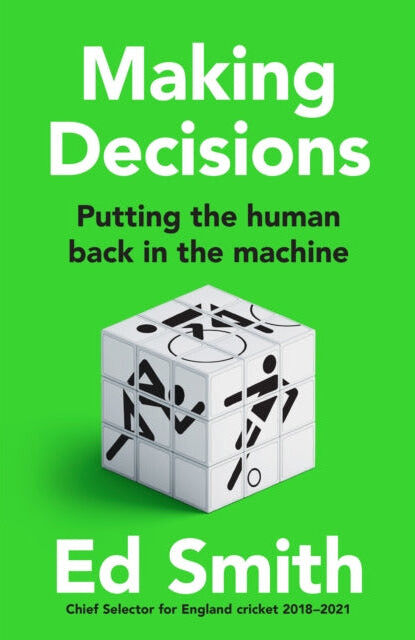
William Collins Making Decisions Book – Leadership, Judgement & Smart Thinking GuideWinning takes many forms. For fans of Matthew Syed, this is a great sports book about leadership, judgement and decision-making - rooted in the theory that helped Ed Smith lead England cricket to sustained success. And to help us all win more.'An absolutely fascinating book' THE GAME, The Times football pod How do you spot the opportunities that others miss?How do you turn a team's performance around?How do you make good decisions amid a tidal wave of information? And how can you improve? As chief selector for the England cricket team, Ed Smith pioneered new methods for building successful teams and watched his decisions tested in real time on the pitch. During his three-year tenure, England averaged 7 wins in every 10 completed matches, better than they have performed before or since. Making Decisions reveals Smith's unique approach to finding success in a fast-changing and increasingly data-reliant world.The best decisions, Smith argues, rely on a combination of differing kinds of intelligence: from algorithms to intuition. This is a truth that the most successful people know: data cannot account for everything, it must be harnessed with human insight. Whatever the power of data, humans aren't finished yet.Sharing for the first time the tools he introduced as England selector, Smith's book captures the immediacy of life at the sharp end, while also exploring frameworks from the top levels of sports, business and the arts. Decision-making is revealed as a creative enterprise, not a reductive system. Making Decisions offers an invaluable guide for those who want a better framework for developing, explaining and implementing new ideas.18,35 £*Shipping: 2,99 £Secure redirect to the provider
-
Wilco International LLP How to Win Friends and Influence People by Dale Carnegie Classic Self Help Book on Communication, Leadership, Confidence & Personal DevelopmentDiscover one of the world's best-known personal development books with How to Win Friends and Influence People by Dale Carnegie. First published in 1936, this enduring classic presents practical principles for communicating effectively, building positive relationships and working successfully with other people. Through memorable examples and straightforward advice, Carnegie explores how to make a positive impression, handle disagreements constructively, encourage cooperation and become a more effective communicator. The principles can be applied across everyday life, from personal relationships and social situations to business, management, sales, networking and leadership. Accessible and practical, How to Win Friends and Influence People remains popular with readers interested in improving their communication skills, confidence, interpersonal relationships and professional development. Key Features Classic personal development book by Dale Carnegie Practical principles for improving communication Explores relationships, leadership and interpersonal skills Useful for business, management, sales and networking Helps readers understand effective people skills Suitable for personal and professional development Excellent gift for entrepreneurs, managers and self-improvement readers9,99 £*Shipping: 2,99 £Secure redirect to the provider
-
VALEO 690018 Air conditioning compressorNew Part: ; Compressor ID: 5SL; Refrigerant: R134a, R1234yf; Voltage [V]: 12; Oil Fill Quantity [ml]: 110; Belt Pulley Ø [mm]: 110; Number of grooves: 6; Supplementary Article / Supplementary Info Info 2: with PAG compressor oil; Compressor Oil: PS-R1; Weight [kg]: 5,19; TecDoc Engine Number: 38530, 31763, 31068, 31071, 27968, 32307, 29557, 35077, 35982; Emissions Standard: Euro 6.1; Vehicle Equipment: for vehicles with start-stop function; alternative OE number: 9676862380; Construction Year from: 04/2015; Construction Year to: 10/2018; Transmission Type: 5-Speed Manual Transmission, 6-Speed Manual Transmission, automatically operated, Semi-automatic, 6-Speed Manual Transmission; Engine Code: DV6FD,, DV6FE326,99 £*Shipping: 1,99 £Secure redirect to the provider
-
VALEO 690035 Air conditioning compressorNew Part: ; Compressor ID: 7SE; Refrigerant: R134a; Voltage [V]: 12; Oil Fill Quantity [ml]: 100; Belt Pulley Ø [mm]: 110; Number of grooves: 6; Supplementary Article / Supplementary Info Info 2: with PAG compressor oil; Compressor Oil: PAG 46; Weight [kg]: 6,76; Transmission Type: 8-Speed Automatic Transmission; Vehicle Identification Number (VIN) from: V90866, HA000001, K2000001; Vehicle Equipment: for vehicles with rear air conditioning, for vehicles with automatic climate control; Engine Code: 306DT; TecDoc Engine Number: 45901; Construction Year to: 02/2021287,99 £*Shipping: 1,99 £Secure redirect to the provider
-
What is an example of operant conditioning?
An example of operant conditioning is a student receiving a sticker for completing their homework. In this scenario, the sticker serves as a positive reinforcement for the desired behavior of completing homework. Over time, the student is more likely to continue completing their homework in order to receive more stickers, demonstrating the principles of operant conditioning. **
-
How can the classical conditioning model be expanded?
The classical conditioning model can be expanded by incorporating different types of stimuli and responses beyond the traditional pairing of a neutral stimulus with an unconditioned stimulus. This could involve exploring how different types of conditioning (e.g., higher-order conditioning, extinction, spontaneous recovery) interact with each other. Additionally, researchers can investigate how individual differences, such as genetics or previous experiences, influence the process of classical conditioning. Finally, the model can be expanded by examining how classical conditioning principles apply to more complex behaviors and cognitive processes. **
-
How can the model of classical conditioning be expanded?
The model of classical conditioning can be expanded by incorporating additional factors that influence the conditioning process. This can include exploring the role of cognitive processes, such as attention and expectation, in shaping the conditioning response. Additionally, considering the impact of individual differences, such as personality traits or previous experiences, can provide a more comprehensive understanding of how classical conditioning operates in different contexts. Furthermore, examining the neural mechanisms underlying classical conditioning can offer insights into the physiological basis of learning and memory. **
-
What are the differences between classical conditioning and operant conditioning?
Classical conditioning involves associating an involuntary response with a stimulus, while operant conditioning involves associating a voluntary behavior with a consequence. In classical conditioning, the learner is passive and responds reflexively to stimuli, whereas in operant conditioning, the learner is active and engages in behaviors to receive rewards or avoid punishments. Additionally, classical conditioning focuses on creating associations between stimuli, while operant conditioning focuses on shaping behaviors through reinforcement or punishment. **
Similar search terms for Conditioning
-
VALEO 690178 Air conditioning compressorNew Part: ; Compressor ID: FS10; Refrigerant: R134a; Voltage [V]: 12; Oil Fill Quantity [ml]: 160; Belt Pulley Ø [mm]: 127; Number of grooves: 6; Supplementary Article / Supplementary Info Info 2: with PAG compressor oil; Compressor Oil: PAG 100; Weight [kg]: 7,23, 7,7; Construction Year to: 01/2002, 10/2002; TecDoc Engine Number: 46307, 46310, 46313, 46316; Transmission Type: 5-Speed Manual Transmission135,99 £*Shipping: 8,45 £Secure redirect to the provider
-
VALEO 690206 Air conditioning compressorNew Part: ; Compressor ID: 10S15; Manufacturer Restriction: DENSO; Refrigerant: R134a; Voltage [V]: 12; Oil Fill Quantity [ml]: 160; Belt Pulley Ø [mm]: 129; Number of grooves: 5; Capacity Compressor [ccm]: 177; Supplementary Article / Supplementary Info Info 2: with PAG compressor oil; Compressor Oil: PAG 46; Weight [kg]: 7,39; alternative OE number: 9770126200, 9770126011, 9770126300; Engine Code: G4JP; Transmission Type: 4-Speed Automatic Transmission; Construction Year to: 08/2002; Vehicle Equipment: for vehicles with automatic climate control; Left-/right-hand drive vehicles: for right-hand drive vehicles; TecDoc Engine Number: 4563231,99 £*Shipping: 1,99 £Secure redirect to the provider
-
VALEO 690230 Air conditioning compressorNew Part: ; Compressor ID: 7H15; Refrigerant: R134a; Voltage [V]: 12; Oil Fill Quantity [ml]: 130; Belt Pulley Ø [mm]: 117; Number of grooves: 5; Supplementary Article / Supplementary Info Info 2: with PAG compressor oil; Compressor Oil: PAG 46; Weight [kg]: 7,7; Engine Code: 8140-43,8140-43S157,99 £*Shipping: 1,99 £Secure redirect to the provider
-
VALEO 690234 Air conditioning compressorNew Part: ; Compressor ID: 6SEU; Refrigerant: R134a; Voltage [V]: 12; Oil Fill Quantity [ml]: 100; Belt Pulley Ø [mm]: 110; Number of grooves: 6; Supplementary Article / Supplementary Info Info 2: with PAG compressor oil; Compressor Oil: PAG 46; Weight [kg]: 6,3; Construction Year to: 09/2008, 08/2008, 02/2010; TecDoc Engine Number: 19922, 24405; Left-/right-hand drive vehicles: for right-hand drive vehicles; Transmission Type: 6-Speed Manual Transmission, for 8-speed automatic transmission; Vehicle Equipment: for vehicles with automatic climate control249,99 £*Shipping: 1,99 £Secure redirect to the provider
-
Is the air conditioning condenser defective after the air conditioning service?
It is possible that the air conditioning condenser could be defective after an air conditioning service. If the condenser was not properly maintained or serviced, it could develop issues that affect its performance. Additionally, if the service was not performed correctly, it could lead to damage or malfunction of the condenser. It is important to have a professional inspect the condenser to determine if it is defective and needs to be repaired or replaced. **
-
What is classical conditioning?
Classical conditioning is a type of learning in which a neutral stimulus becomes associated with a meaningful stimulus and produces a similar response. This process involves pairing a neutral stimulus with an unconditioned stimulus that naturally elicits a response. Over time, the neutral stimulus alone can evoke the same response as the unconditioned stimulus. This type of conditioning was first studied by Ivan Pavlov with his famous experiment involving dogs and the ringing of a bell. **
-
What is ethical conditioning?
Ethical conditioning refers to the process of instilling moral values, principles, and beliefs in individuals through socialization, education, and cultural influences. It involves shaping an individual's understanding of right and wrong, and guiding their behavior towards ethical decision-making. Ethical conditioning can be influenced by various factors such as family, religion, education, and societal norms, and plays a crucial role in shaping an individual's moral compass and ethical behavior. It is essential for promoting a just and harmonious society, and for fostering a sense of responsibility and accountability in individuals. **
-
What is operant conditioning?
Operant conditioning is a type of learning in which behavior is strengthened or weakened based on the consequences that follow it. It involves the use of reinforcement and punishment to shape behavior. Reinforcement increases the likelihood of a behavior being repeated, while punishment decreases the likelihood of a behavior being repeated. This type of conditioning was developed by psychologist B.F. Skinner through his experiments with animals. **
* All prices are inclusive of VAT and, if applicable, plus shipping costs. The offer information is based on the details provided by the respective shop and is updated through automated processes. Real-time updates do not occur, so deviations can occur in individual cases. ** Note: Parts of this content were created by AI.