Buy rolemodel.eu ?
We are moving the project
rolemodel.eu .
Are you interested in purchasing the domain
rolemodel.eu ?
domain@kv-gmbh.de · 0541-91531010
Buy rolemodel.eu ?
What is the Immaculate Conception?
The Immaculate Conception is a doctrine in the Catholic Church that refers to the belief that Mary, the mother of Jesus, was conceived without original sin. This means that from the moment of her conception, Mary was preserved from the stain of original sin by the grace of God. The Immaculate Conception is celebrated on December 8th and is distinct from the Virgin Birth, which refers to the conception of Jesus in Mary's womb without the involvement of a human father. **
Where were we before conception?
Before conception, we did not exist as individuals. Our existence began at the moment of conception when the sperm fertilized the egg, forming a unique genetic combination that would develop into a new human being. Prior to conception, our genetic material existed in our parents' bodies, but we did not have a separate existence. Our individual identity and existence began with the union of the sperm and egg. **

Similar search terms for Conception
Top-Angebote
Products related to Conception:
-
Wilco International LLP How to Win Friends and Influence People by Dale Carnegie Classic Self Help Book on Communication, Leadership, Confidence & Personal DevelopmentDiscover one of the world's best-known personal development books with How to Win Friends and Influence People by Dale Carnegie. First published in 1936, this enduring classic presents practical principles for communicating effectively, building positive relationships and working successfully with other people. Through memorable examples and straightforward advice, Carnegie explores how to make a positive impression, handle disagreements constructively, encourage cooperation and become a more effective communicator. The principles can be applied across everyday life, from personal relationships and social situations to business, management, sales, networking and leadership. Accessible and practical, How to Win Friends and Influence People remains popular with readers interested in improving their communication skills, confidence, interpersonal relationships and professional development. Key Features Classic personal development book by Dale Carnegie Practical principles for improving communication Explores relationships, leadership and interpersonal skills Useful for business, management, sales and networking Helps readers understand effective people skills Suitable for personal and professional development Excellent gift for entrepreneurs, managers and self-improvement readers9,99 £*Shipping: 2,99 £Secure redirect to the provider
-
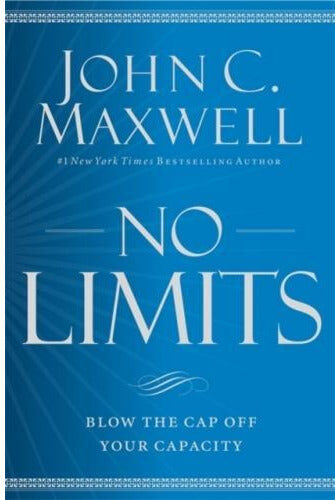
Little Brown Book Group No Limits: Blow the Cap Off Your Capacity by John C. Maxwell – Personal Growth & Leadership Development GuideNo Limits: Blow the CAP Off Your Capacity Description We often treat the word capacity as if it were a natural law of limitation. Unfortunately; most of us are much more comfortable defining what we perceive is off limits rather than what's possible. Could it be that many people have allowed what they perceive as capacity to define them? Have they allowed their perception to limit their attitudes about their potential? In his newest book; John Maxwell identifies 17 core capacities. Some of these are abilities we all already possess; such as energy; creativity and leadership. Others are aspects of our lives controlled by our choices; like our attitudes; character; and intentionality. Maxwell examines each of these 17 capacities; and provides clear and actionable advice on how you can increase your potential in each. He will guide you on how to identify; grow; and apply your critical capacities to your daily life. Once you've blown the 'cap' off your capacities; you'll find yourself more successful--and fulfilled--in your daily life.5,99 £*Shipping: 2,99 £Secure redirect to the provider

-
What does immaculate conception mean?
The term "immaculate conception" refers to the Catholic doctrine that Mary, the mother of Jesus, was conceived without original sin. This belief holds that from the moment of her conception, Mary was preserved from the stain of original sin by the grace of God. It is important to note that the immaculate conception is not the same as the virgin birth of Jesus, which refers to the belief that Jesus was born to Mary without the involvement of a human father. **
-
What is your conception of God?
As an AI language model, I do not have personal beliefs or conceptions. However, I can provide a general understanding of the concept of God. The conception of God varies greatly among different religious and philosophical traditions. Some view God as a supreme being who created and oversees the universe, while others see God as an abstract, impersonal force or energy. Additionally, some people may not believe in a traditional concept of God at all. Ultimately, the conception of God is deeply personal and can vary widely from person to person. **
-
What is Descartes' conception of God?
Descartes' conception of God is that of a perfect, infinite, and all-powerful being. He argues that the idea of God is innate in humans and that God is the guarantor of the truth of all clear and distinct ideas. Descartes also believes that God is the creator of the universe and that his existence can be proven through the ontological argument. Overall, Descartes' conception of God is central to his philosophy, serving as the foundation for his epistemological and metaphysical beliefs. **
-
What is Kant's conception of prudence?
Kant's conception of prudence is the idea of making decisions and taking actions that are in line with one's long-term self-interest and well-being. He emphasizes the importance of rationality and self-control in making prudent choices, and argues that prudence involves considering the potential consequences of one's actions and acting in a way that promotes one's own happiness and flourishing. Kant also emphasizes the importance of moral principles in guiding prudent behavior, suggesting that prudence should be guided by a sense of duty and respect for moral law. **
When was the day of conception?
The day of conception is typically estimated to be about two weeks after the first day of the woman's last menstrual period. This is because ovulation, when the egg is released and can be fertilized, usually occurs around the middle of a woman's menstrual cycle. However, it can be difficult to pinpoint the exact day of conception, as sperm can survive in the female reproductive system for several days, and the exact timing of ovulation can vary from woman to woman. **
What was Hitler's conception of peace?
Hitler's conception of peace was based on the idea of achieving a "Greater Germany" through the expansion of its territory and the domination of other nations. He believed that peace could only be achieved through the establishment of a German empire that would secure Lebensraum, or living space, for the German people. This expansionist and aggressive approach to peace led to the invasion of neighboring countries and ultimately to World War II. Hitler's vision of peace was rooted in the pursuit of power and dominance, rather than cooperation and diplomacy. **
Top-Angebote
Products related to Conception:
-
HQ Birthing: The new self-help guide from the author of the bestseller Menopausing to help you through every stage of pregnancy from conception to childbBirthing: The new self-help guide from the author of the bestseller Menopausing to help you through every stage of pregnancy from conception to childbirth to the fourth trimester22,00 £*Shipping: 2,99 £Secure redirect to the provider
-
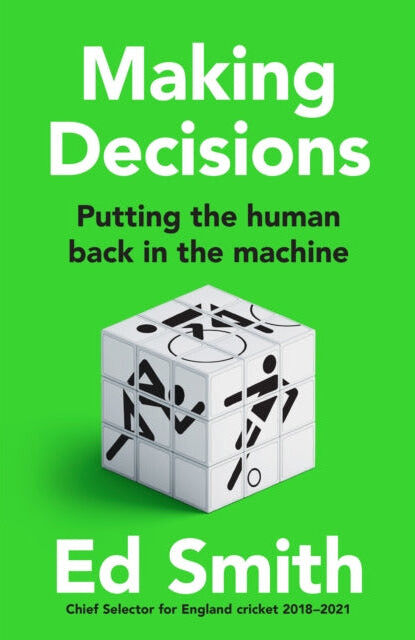
William Collins Making Decisions Book – Leadership, Judgement & Smart Thinking GuideWinning takes many forms. For fans of Matthew Syed, this is a great sports book about leadership, judgement and decision-making - rooted in the theory that helped Ed Smith lead England cricket to sustained success. And to help us all win more.'An absolutely fascinating book' THE GAME, The Times football pod How do you spot the opportunities that others miss?How do you turn a team's performance around?How do you make good decisions amid a tidal wave of information? And how can you improve? As chief selector for the England cricket team, Ed Smith pioneered new methods for building successful teams and watched his decisions tested in real time on the pitch. During his three-year tenure, England averaged 7 wins in every 10 completed matches, better than they have performed before or since. Making Decisions reveals Smith's unique approach to finding success in a fast-changing and increasingly data-reliant world.The best decisions, Smith argues, rely on a combination of differing kinds of intelligence: from algorithms to intuition. This is a truth that the most successful people know: data cannot account for everything, it must be harnessed with human insight. Whatever the power of data, humans aren't finished yet.Sharing for the first time the tools he introduced as England selector, Smith's book captures the immediacy of life at the sharp end, while also exploring frameworks from the top levels of sports, business and the arts. Decision-making is revealed as a creative enterprise, not a reductive system. Making Decisions offers an invaluable guide for those who want a better framework for developing, explaining and implementing new ideas.18,35 £*Shipping: 2,99 £Secure redirect to the provider
-
Wilco International LLP How to Win Friends and Influence People by Dale Carnegie Classic Self Help Book on Communication, Leadership, Confidence & Personal DevelopmentDiscover one of the world's best-known personal development books with How to Win Friends and Influence People by Dale Carnegie. First published in 1936, this enduring classic presents practical principles for communicating effectively, building positive relationships and working successfully with other people. Through memorable examples and straightforward advice, Carnegie explores how to make a positive impression, handle disagreements constructively, encourage cooperation and become a more effective communicator. The principles can be applied across everyday life, from personal relationships and social situations to business, management, sales, networking and leadership. Accessible and practical, How to Win Friends and Influence People remains popular with readers interested in improving their communication skills, confidence, interpersonal relationships and professional development. Key Features Classic personal development book by Dale Carnegie Practical principles for improving communication Explores relationships, leadership and interpersonal skills Useful for business, management, sales and networking Helps readers understand effective people skills Suitable for personal and professional development Excellent gift for entrepreneurs, managers and self-improvement readers9,99 £*Shipping: 2,99 £Secure redirect to the provider
-
Little Brown Book Group No Limits: Blow the Cap Off Your Capacity by John C. Maxwell – Personal Growth & Leadership Development GuideNo Limits: Blow the CAP Off Your Capacity Description We often treat the word capacity as if it were a natural law of limitation. Unfortunately; most of us are much more comfortable defining what we perceive is off limits rather than what's possible. Could it be that many people have allowed what they perceive as capacity to define them? Have they allowed their perception to limit their attitudes about their potential? In his newest book; John Maxwell identifies 17 core capacities. Some of these are abilities we all already possess; such as energy; creativity and leadership. Others are aspects of our lives controlled by our choices; like our attitudes; character; and intentionality. Maxwell examines each of these 17 capacities; and provides clear and actionable advice on how you can increase your potential in each. He will guide you on how to identify; grow; and apply your critical capacities to your daily life. Once you've blown the 'cap' off your capacities; you'll find yourself more successful--and fulfilled--in your daily life.5,99 £*Shipping: 2,99 £Secure redirect to the provider
-
What is the Immaculate Conception?
The Immaculate Conception is a doctrine in the Catholic Church that refers to the belief that Mary, the mother of Jesus, was conceived without original sin. This means that from the moment of her conception, Mary was preserved from the stain of original sin by the grace of God. The Immaculate Conception is celebrated on December 8th and is distinct from the Virgin Birth, which refers to the conception of Jesus in Mary's womb without the involvement of a human father. **
-
Where were we before conception?
Before conception, we did not exist as individuals. Our existence began at the moment of conception when the sperm fertilized the egg, forming a unique genetic combination that would develop into a new human being. Prior to conception, our genetic material existed in our parents' bodies, but we did not have a separate existence. Our individual identity and existence began with the union of the sperm and egg. **
-
What does immaculate conception mean?
The term "immaculate conception" refers to the Catholic doctrine that Mary, the mother of Jesus, was conceived without original sin. This belief holds that from the moment of her conception, Mary was preserved from the stain of original sin by the grace of God. It is important to note that the immaculate conception is not the same as the virgin birth of Jesus, which refers to the belief that Jesus was born to Mary without the involvement of a human father. **
-
What is your conception of God?
As an AI language model, I do not have personal beliefs or conceptions. However, I can provide a general understanding of the concept of God. The conception of God varies greatly among different religious and philosophical traditions. Some view God as a supreme being who created and oversees the universe, while others see God as an abstract, impersonal force or energy. Additionally, some people may not believe in a traditional concept of God at all. Ultimately, the conception of God is deeply personal and can vary widely from person to person. **
Similar search terms for Conception
-
What is Descartes' conception of God?
Descartes' conception of God is that of a perfect, infinite, and all-powerful being. He argues that the idea of God is innate in humans and that God is the guarantor of the truth of all clear and distinct ideas. Descartes also believes that God is the creator of the universe and that his existence can be proven through the ontological argument. Overall, Descartes' conception of God is central to his philosophy, serving as the foundation for his epistemological and metaphysical beliefs. **
-
What is Kant's conception of prudence?
Kant's conception of prudence is the idea of making decisions and taking actions that are in line with one's long-term self-interest and well-being. He emphasizes the importance of rationality and self-control in making prudent choices, and argues that prudence involves considering the potential consequences of one's actions and acting in a way that promotes one's own happiness and flourishing. Kant also emphasizes the importance of moral principles in guiding prudent behavior, suggesting that prudence should be guided by a sense of duty and respect for moral law. **
-
When was the day of conception?
The day of conception is typically estimated to be about two weeks after the first day of the woman's last menstrual period. This is because ovulation, when the egg is released and can be fertilized, usually occurs around the middle of a woman's menstrual cycle. However, it can be difficult to pinpoint the exact day of conception, as sperm can survive in the female reproductive system for several days, and the exact timing of ovulation can vary from woman to woman. **
-
What was Hitler's conception of peace?
Hitler's conception of peace was based on the idea of achieving a "Greater Germany" through the expansion of its territory and the domination of other nations. He believed that peace could only be achieved through the establishment of a German empire that would secure Lebensraum, or living space, for the German people. This expansionist and aggressive approach to peace led to the invasion of neighboring countries and ultimately to World War II. Hitler's vision of peace was rooted in the pursuit of power and dominance, rather than cooperation and diplomacy. **
* All prices are inclusive of VAT and, if applicable, plus shipping costs. The offer information is based on the details provided by the respective shop and is updated through automated processes. Real-time updates do not occur, so deviations can occur in individual cases. ** Note: Parts of this content were created by AI.