Buy rolemodel.eu ?
We are moving the project
rolemodel.eu .
Are you interested in purchasing the domain
rolemodel.eu ?
domain@kv-gmbh.de · 0541-91531010
Buy rolemodel.eu ?
How can one distinguish ionic compounds from molecular compounds?
Ionic compounds are formed from the attraction between positively and negatively charged ions, while molecular compounds are formed from the sharing of electrons between atoms. One way to distinguish between the two is to look at their chemical formulas. Ionic compounds typically consist of a metal and a nonmetal, while molecular compounds consist of nonmetals only. Additionally, ionic compounds tend to have higher melting and boiling points compared to molecular compounds due to their strong electrostatic attractions. Finally, conducting a simple solubility test can also help distinguish between the two types of compounds, as ionic compounds are often soluble in water while molecular compounds may not be. **
How do you distinguish determinative compounds and possessive compounds?
Determinative compounds are formed by combining two words to create a new concept, where the first word determines the meaning of the second word. For example, "blackboard" is a determinative compound where "black" determines the type of "board." Possessive compounds, on the other hand, indicate possession or relationship between the two words. For example, "John's car" is a possessive compound where "John" possesses the "car." In summary, determinative compounds determine the meaning of the second word, while possessive compounds indicate possession or relationship between the two words. **


Similar search terms for Compounds
Top-Angebote
Products related to Compounds:
-
Wilco International LLP How to Win Friends and Influence People by Dale Carnegie Classic Self Help Book on Communication, Leadership, Confidence & Personal DevelopmentDiscover one of the world's best-known personal development books with How to Win Friends and Influence People by Dale Carnegie. First published in 1936, this enduring classic presents practical principles for communicating effectively, building positive relationships and working successfully with other people. Through memorable examples and straightforward advice, Carnegie explores how to make a positive impression, handle disagreements constructively, encourage cooperation and become a more effective communicator. The principles can be applied across everyday life, from personal relationships and social situations to business, management, sales, networking and leadership. Accessible and practical, How to Win Friends and Influence People remains popular with readers interested in improving their communication skills, confidence, interpersonal relationships and professional development. Key Features Classic personal development book by Dale Carnegie Practical principles for improving communication Explores relationships, leadership and interpersonal skills Useful for business, management, sales and networking Helps readers understand effective people skills Suitable for personal and professional development Excellent gift for entrepreneurs, managers and self-improvement readers9,99 £*Shipping: 2,99 £Secure redirect to the provider
-
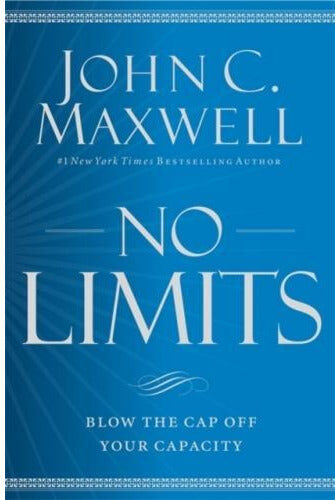
Little Brown Book Group No Limits: Blow the Cap Off Your Capacity by John C. Maxwell – Personal Growth & Leadership Development GuideNo Limits: Blow the CAP Off Your Capacity Description We often treat the word capacity as if it were a natural law of limitation. Unfortunately; most of us are much more comfortable defining what we perceive is off limits rather than what's possible. Could it be that many people have allowed what they perceive as capacity to define them? Have they allowed their perception to limit their attitudes about their potential? In his newest book; John Maxwell identifies 17 core capacities. Some of these are abilities we all already possess; such as energy; creativity and leadership. Others are aspects of our lives controlled by our choices; like our attitudes; character; and intentionality. Maxwell examines each of these 17 capacities; and provides clear and actionable advice on how you can increase your potential in each. He will guide you on how to identify; grow; and apply your critical capacities to your daily life. Once you've blown the 'cap' off your capacities; you'll find yourself more successful--and fulfilled--in your daily life.5,99 £*Shipping: 2,99 £Secure redirect to the provider
-
Style Haven Global Influence Floral Medallion Area RugComplement the luxe vibe in your high-end interiors with this Global Influence floral medallion area rug. Featuring red and Beige, Cream hues for statement-making style, this area rug is machine-made from polypropylene for long-wearing appeal.377,49 $*Shipping: 0,00 $Secure redirect to the provider
-
Piatkus Fierce Leadership By Susan Scott Fierce ConversationsFierce Leadership By Susan Scott Fierce Conversations For years, these mantras have been blindly adopted by business leaders everywhere but, as Susan Scott shows, these so-called best practices are ineffectual, cost companies vast sums and drive away the most valuable employees and customers. Yet they are so deeply ingrained in our organisational culture that no one has questioned them, until now. Informed by over a decade of research and work with CEOs and senior executives of the world's leading companies, Susan Scott reveals why these established practices are so wrongheaded and shows you how to spot the signs that you are falling prey to them and why they are adversely affecting your business. She then, in her direct, no-nonsense style, suggests a series of surprising and smart alternatives that you should put in their place.1,99 £*Shipping: 1,99 £Secure redirect to the provider



-
Can you help me with chemistry? I need information about atomic compounds, metal compounds, and ionic compounds.
Of course! Atomic compounds are formed when two or more non-metal atoms are chemically bonded together, such as in molecules like water (H2O) and carbon dioxide (CO2). Metal compounds are formed when a metal atom is bonded to one or more non-metal atoms, such as in compounds like sodium chloride (NaCl) and iron oxide (Fe2O3). Ionic compounds are formed when a metal atom transfers one or more electrons to a non-metal atom, resulting in the formation of positively and negatively charged ions that are attracted to each other, such as in compounds like sodium chloride (NaCl) and calcium carbonate (CaCO3). Let me know if you need more specific information or examples! **
-
Why do molecular compounds have lower boiling points than ionic compounds?
Molecular compounds have lower boiling points than ionic compounds because the intermolecular forces holding the molecules together are generally weaker than the electrostatic forces holding ions together in ionic compounds. In molecular compounds, the intermolecular forces are typically van der Waals forces, dipole-dipole interactions, or hydrogen bonding, which are weaker than the strong ionic bonds in ionic compounds. As a result, less energy is required to overcome these weaker intermolecular forces, leading to lower boiling points for molecular compounds compared to ionic compounds. **
-
What are sodium compounds?
Sodium compounds are chemical compounds that contain sodium as one of their elements. These compounds can be found in various forms, such as sodium chloride (table salt), sodium hydroxide (lye), and sodium bicarbonate (baking soda). Sodium compounds are widely used in industry, agriculture, and everyday life due to their diverse properties and applications. **
-
Name the isomeric compounds.
Isomers are compounds that have the same molecular formula but different structural arrangements. Some examples of isomeric compounds include butane and isobutane, which both have the molecular formula C4H10 but differ in their structural arrangement. Another example is glucose and fructose, which both have the molecular formula C6H12O6 but have different structural arrangements and properties. **


What are atomic compounds?
Atomic compounds are chemical compounds that are composed of individual atoms of different elements bonded together. These compounds are held together by chemical bonds, such as ionic or covalent bonds, and do not contain any molecules. Examples of atomic compounds include sodium chloride (NaCl) and water (H2O). Unlike molecular compounds, which are made up of molecules, atomic compounds are made up of individual atoms. **
What are molecular compounds?
Molecular compounds are chemical compounds formed by the combination of two or more non-metal atoms. These atoms are held together by covalent bonds, which involve the sharing of electrons. Molecular compounds can exist as discrete molecules, such as water (H2O) and carbon dioxide (CO2), and they typically have lower melting and boiling points compared to ionic compounds. Examples of molecular compounds include methane (CH4), ammonia (NH3), and sulfur dioxide (SO2). **
Top-Angebote
Products related to Compounds:
-
Arctic MX Cleaner - Wipes for removing Thermal Compounds (40 Pieces)ARCTIC MX Cleaner is a box of 40 individually sealed wet wipes for removing old thermal paste from CPUs, GPUs and heatsinks before reapplying compound. The cleaning fluid is limonene-based, derived from citrus oil, and contains no alcohol or benzene, so it is gentle on metals and alloys and leaves no residue. Each wipe is packed airtight to stay moist until it is used.12,99 £*Shipping: 0,00 £Secure redirect to the provider
-
William Collins Making Decisions Book – Leadership, Judgement & Smart Thinking GuideWinning takes many forms. For fans of Matthew Syed, this is a great sports book about leadership, judgement and decision-making - rooted in the theory that helped Ed Smith lead England cricket to sustained success. And to help us all win more.'An absolutely fascinating book' THE GAME, The Times football pod How do you spot the opportunities that others miss?How do you turn a team's performance around?How do you make good decisions amid a tidal wave of information? And how can you improve? As chief selector for the England cricket team, Ed Smith pioneered new methods for building successful teams and watched his decisions tested in real time on the pitch. During his three-year tenure, England averaged 7 wins in every 10 completed matches, better than they have performed before or since. Making Decisions reveals Smith's unique approach to finding success in a fast-changing and increasingly data-reliant world.The best decisions, Smith argues, rely on a combination of differing kinds of intelligence: from algorithms to intuition. This is a truth that the most successful people know: data cannot account for everything, it must be harnessed with human insight. Whatever the power of data, humans aren't finished yet.Sharing for the first time the tools he introduced as England selector, Smith's book captures the immediacy of life at the sharp end, while also exploring frameworks from the top levels of sports, business and the arts. Decision-making is revealed as a creative enterprise, not a reductive system. Making Decisions offers an invaluable guide for those who want a better framework for developing, explaining and implementing new ideas.18,35 £*Shipping: 2,99 £Secure redirect to the provider
-
Wilco International LLP How to Win Friends and Influence People by Dale Carnegie Classic Self Help Book on Communication, Leadership, Confidence & Personal DevelopmentDiscover one of the world's best-known personal development books with How to Win Friends and Influence People by Dale Carnegie. First published in 1936, this enduring classic presents practical principles for communicating effectively, building positive relationships and working successfully with other people. Through memorable examples and straightforward advice, Carnegie explores how to make a positive impression, handle disagreements constructively, encourage cooperation and become a more effective communicator. The principles can be applied across everyday life, from personal relationships and social situations to business, management, sales, networking and leadership. Accessible and practical, How to Win Friends and Influence People remains popular with readers interested in improving their communication skills, confidence, interpersonal relationships and professional development. Key Features Classic personal development book by Dale Carnegie Practical principles for improving communication Explores relationships, leadership and interpersonal skills Useful for business, management, sales and networking Helps readers understand effective people skills Suitable for personal and professional development Excellent gift for entrepreneurs, managers and self-improvement readers9,99 £*Shipping: 2,99 £Secure redirect to the provider
-
Little Brown Book Group No Limits: Blow the Cap Off Your Capacity by John C. Maxwell – Personal Growth & Leadership Development GuideNo Limits: Blow the CAP Off Your Capacity Description We often treat the word capacity as if it were a natural law of limitation. Unfortunately; most of us are much more comfortable defining what we perceive is off limits rather than what's possible. Could it be that many people have allowed what they perceive as capacity to define them? Have they allowed their perception to limit their attitudes about their potential? In his newest book; John Maxwell identifies 17 core capacities. Some of these are abilities we all already possess; such as energy; creativity and leadership. Others are aspects of our lives controlled by our choices; like our attitudes; character; and intentionality. Maxwell examines each of these 17 capacities; and provides clear and actionable advice on how you can increase your potential in each. He will guide you on how to identify; grow; and apply your critical capacities to your daily life. Once you've blown the 'cap' off your capacities; you'll find yourself more successful--and fulfilled--in your daily life.5,99 £*Shipping: 2,99 £Secure redirect to the provider
-
How can one distinguish ionic compounds from molecular compounds?
Ionic compounds are formed from the attraction between positively and negatively charged ions, while molecular compounds are formed from the sharing of electrons between atoms. One way to distinguish between the two is to look at their chemical formulas. Ionic compounds typically consist of a metal and a nonmetal, while molecular compounds consist of nonmetals only. Additionally, ionic compounds tend to have higher melting and boiling points compared to molecular compounds due to their strong electrostatic attractions. Finally, conducting a simple solubility test can also help distinguish between the two types of compounds, as ionic compounds are often soluble in water while molecular compounds may not be. **
-
How do you distinguish determinative compounds and possessive compounds?
Determinative compounds are formed by combining two words to create a new concept, where the first word determines the meaning of the second word. For example, "blackboard" is a determinative compound where "black" determines the type of "board." Possessive compounds, on the other hand, indicate possession or relationship between the two words. For example, "John's car" is a possessive compound where "John" possesses the "car." In summary, determinative compounds determine the meaning of the second word, while possessive compounds indicate possession or relationship between the two words. **
-
Can you help me with chemistry? I need information about atomic compounds, metal compounds, and ionic compounds.
Of course! Atomic compounds are formed when two or more non-metal atoms are chemically bonded together, such as in molecules like water (H2O) and carbon dioxide (CO2). Metal compounds are formed when a metal atom is bonded to one or more non-metal atoms, such as in compounds like sodium chloride (NaCl) and iron oxide (Fe2O3). Ionic compounds are formed when a metal atom transfers one or more electrons to a non-metal atom, resulting in the formation of positively and negatively charged ions that are attracted to each other, such as in compounds like sodium chloride (NaCl) and calcium carbonate (CaCO3). Let me know if you need more specific information or examples! **
-
Why do molecular compounds have lower boiling points than ionic compounds?
Molecular compounds have lower boiling points than ionic compounds because the intermolecular forces holding the molecules together are generally weaker than the electrostatic forces holding ions together in ionic compounds. In molecular compounds, the intermolecular forces are typically van der Waals forces, dipole-dipole interactions, or hydrogen bonding, which are weaker than the strong ionic bonds in ionic compounds. As a result, less energy is required to overcome these weaker intermolecular forces, leading to lower boiling points for molecular compounds compared to ionic compounds. **
Similar search terms for Compounds
-
Style Haven Global Influence Floral Medallion Area RugComplement the luxe vibe in your high-end interiors with this Global Influence floral medallion area rug. Featuring red and Beige, Cream hues for statement-making style, this area rug is machine-made from polypropylene for long-wearing appeal.377,49 $*Shipping: 0,00 $Secure redirect to the provider
-
Piatkus Fierce Leadership By Susan Scott Fierce ConversationsFierce Leadership By Susan Scott Fierce Conversations For years, these mantras have been blindly adopted by business leaders everywhere but, as Susan Scott shows, these so-called best practices are ineffectual, cost companies vast sums and drive away the most valuable employees and customers. Yet they are so deeply ingrained in our organisational culture that no one has questioned them, until now. Informed by over a decade of research and work with CEOs and senior executives of the world's leading companies, Susan Scott reveals why these established practices are so wrongheaded and shows you how to spot the signs that you are falling prey to them and why they are adversely affecting your business. She then, in her direct, no-nonsense style, suggests a series of surprising and smart alternatives that you should put in their place.1,99 £*Shipping: 1,99 £Secure redirect to the provider
-
MACMILLAN A Higher Loyalty - Truth Lies And LeadershipA Higher Loyalty: Truth, Lies, and Leadership In his Number One bestselling memoir, former FBI director James Comey shares his never-before-told experiences from some of the highest-stakes situations of his career in the past two decades of American government, exploring what good, ethical leadership looks like, and how it drives sound decisions. His journey provides an unprecedented entry into the corridors of power, and a remarkable lesson in what makes an effective leader. Mr. Comey served as director of the FBI from 2013 to 2017, appointed to the post by President Barack Obama. He previously served as U.S. attorney for the Southern District of New York, and the U.S. deputy attorney general in the administration of President George W. Bush. From prosecuting the Mafia and Martha Stewart to helping change the Bush administration's policies on torture and electronic surveillance, overseeing the Hillary Clinton e-mail investigation as well as ties between the Trump campaign and Russia, Comey has been involved in some of the most consequential cases and policies of recent history.5,99 £*Shipping: 2,99 £Secure redirect to the provider
-
Style Haven Vance Tribal Influence Ivory/ Multi Area Rug.This collection features soft, textured polypropylene yarns in a multi-colored 500,000 point construction for a beautiful saturated color palette. The versatile color range includes deep blues, warm cinnabar, wheat and neutral grays.236,99 $*Shipping: 0,00 $Secure redirect to the provider
-
What are sodium compounds?
Sodium compounds are chemical compounds that contain sodium as one of their elements. These compounds can be found in various forms, such as sodium chloride (table salt), sodium hydroxide (lye), and sodium bicarbonate (baking soda). Sodium compounds are widely used in industry, agriculture, and everyday life due to their diverse properties and applications. **
-
Name the isomeric compounds.
Isomers are compounds that have the same molecular formula but different structural arrangements. Some examples of isomeric compounds include butane and isobutane, which both have the molecular formula C4H10 but differ in their structural arrangement. Another example is glucose and fructose, which both have the molecular formula C6H12O6 but have different structural arrangements and properties. **
-
What are atomic compounds?
Atomic compounds are chemical compounds that are composed of individual atoms of different elements bonded together. These compounds are held together by chemical bonds, such as ionic or covalent bonds, and do not contain any molecules. Examples of atomic compounds include sodium chloride (NaCl) and water (H2O). Unlike molecular compounds, which are made up of molecules, atomic compounds are made up of individual atoms. **
-
What are molecular compounds?
Molecular compounds are chemical compounds formed by the combination of two or more non-metal atoms. These atoms are held together by covalent bonds, which involve the sharing of electrons. Molecular compounds can exist as discrete molecules, such as water (H2O) and carbon dioxide (CO2), and they typically have lower melting and boiling points compared to ionic compounds. Examples of molecular compounds include methane (CH4), ammonia (NH3), and sulfur dioxide (SO2). **
* All prices are inclusive of VAT and, if applicable, plus shipping costs. The offer information is based on the details provided by the respective shop and is updated through automated processes. Real-time updates do not occur, so deviations can occur in individual cases. ** Note: Parts of this content were created by AI.