Buy rolemodel.eu ?
We are moving the project
rolemodel.eu .
Are you interested in purchasing the domain
rolemodel.eu ?
domain@kv-gmbh.de · 0541-91531010
Buy rolemodel.eu ?
Which countries are Balkan countries?
The Balkan countries are located in the southeastern region of Europe and include Albania, Bosnia and Herzegovina, Bulgaria, Croatia, Greece, Kosovo, Montenegro, North Macedonia, Romania, Serbia, and Slovenia. These countries are characterized by their diverse cultures, histories, and landscapes, and are often considered a bridge between the East and the West. The term "Balkan" is derived from the Balkan Mountains, which run through the region. **
Which Balkan countries are Islamic countries?
The Balkan countries with a significant Muslim population are Albania, Bosnia and Herzegovina, and Kosovo. These countries have a long history of Islamic influence and have a majority Muslim population. Islam has played a significant role in shaping the culture, traditions, and architecture of these countries. While other Balkan countries also have Muslim communities, these three countries are considered Islamic countries due to their majority Muslim population. **

Similar search terms for Countries
Top-Angebote
Products related to Countries:
-
William Collins Making Decisions Book – Leadership, Judgement & Smart Thinking GuideWinning takes many forms. For fans of Matthew Syed, this is a great sports book about leadership, judgement and decision-making - rooted in the theory that helped Ed Smith lead England cricket to sustained success. And to help us all win more.'An absolutely fascinating book' THE GAME, The Times football pod How do you spot the opportunities that others miss?How do you turn a team's performance around?How do you make good decisions amid a tidal wave of information? And how can you improve? As chief selector for the England cricket team, Ed Smith pioneered new methods for building successful teams and watched his decisions tested in real time on the pitch. During his three-year tenure, England averaged 7 wins in every 10 completed matches, better than they have performed before or since. Making Decisions reveals Smith's unique approach to finding success in a fast-changing and increasingly data-reliant world.The best decisions, Smith argues, rely on a combination of differing kinds of intelligence: from algorithms to intuition. This is a truth that the most successful people know: data cannot account for everything, it must be harnessed with human insight. Whatever the power of data, humans aren't finished yet.Sharing for the first time the tools he introduced as England selector, Smith's book captures the immediacy of life at the sharp end, while also exploring frameworks from the top levels of sports, business and the arts. Decision-making is revealed as a creative enterprise, not a reductive system. Making Decisions offers an invaluable guide for those who want a better framework for developing, explaining and implementing new ideas.18,35 £*Shipping: 2,99 £Secure redirect to the provider
-
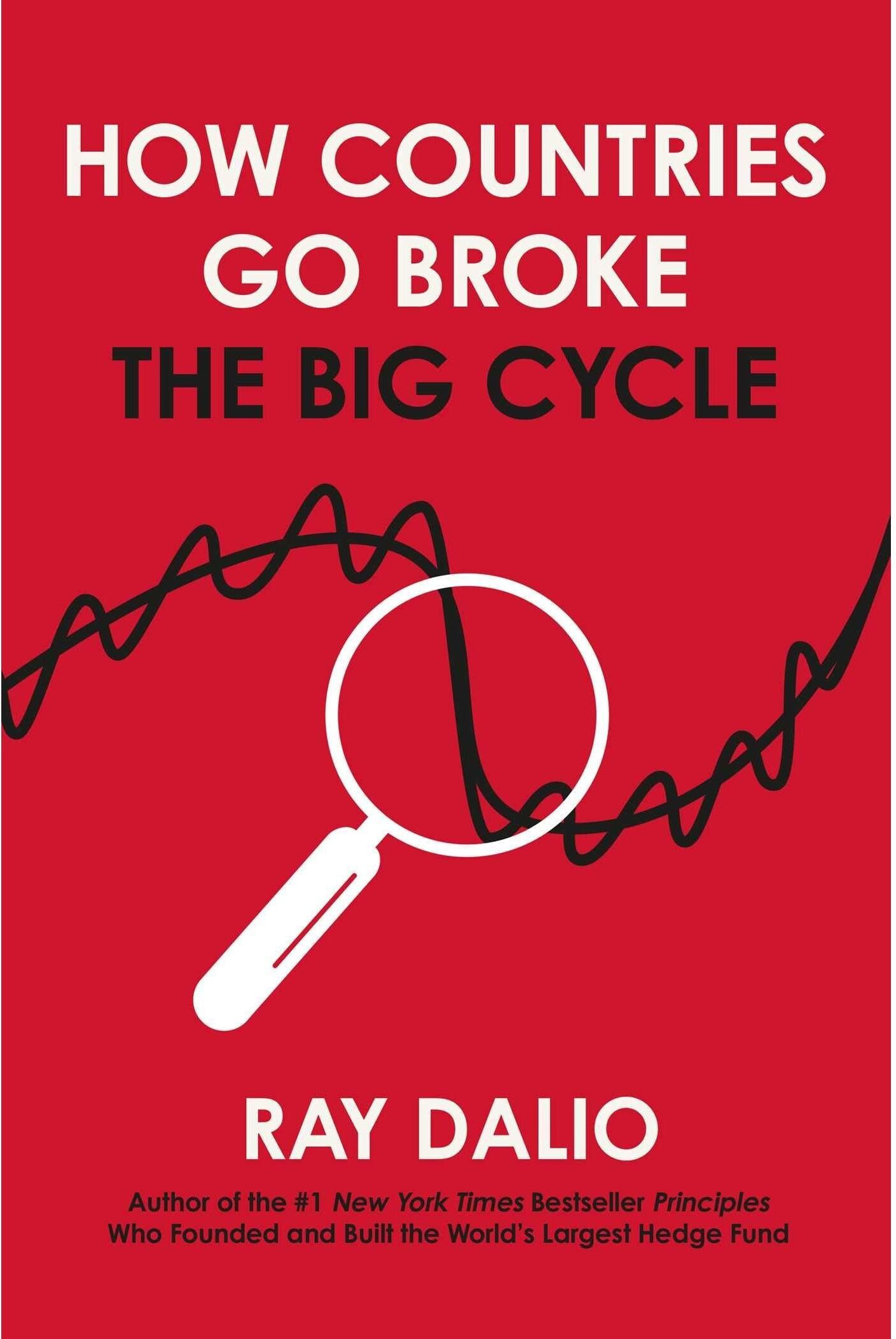
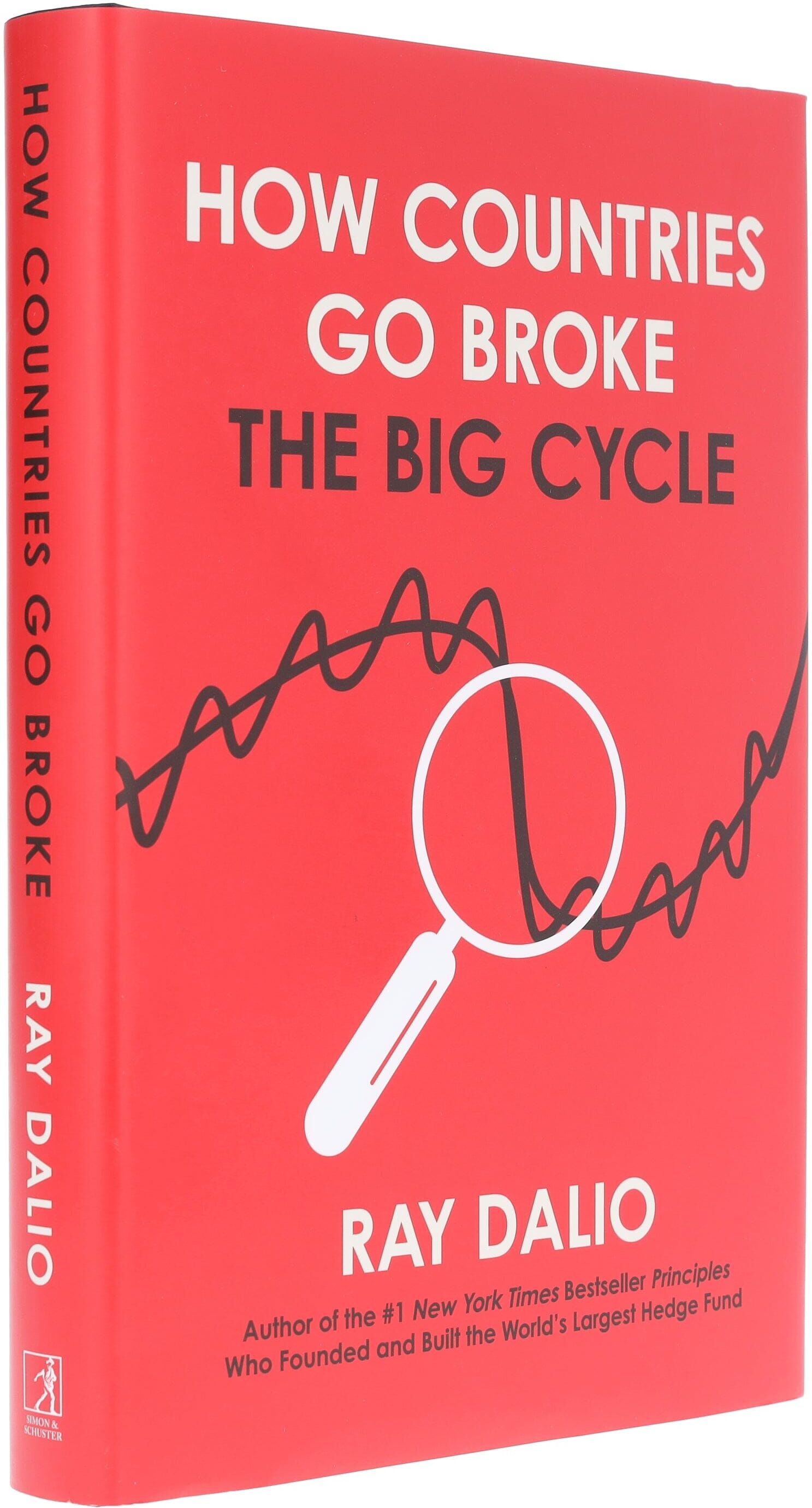
Simon and Schuster UK How Countries Go Broke: Principles for Navigating the Big Debt Cycle, Where We Are Headed, and What We Should DoAn urgent warning about the global economy from Ray Dalio, the #1 New York Times bestselling author of Principles. Do big government debts threaten our collective well-being? Are there limits to debt growth? Can a big, important reserve currency country like the United States really go broke – and what would that look like? For decades, politicians, policymakers and investors have debated these questions, but the answers have eluded them. In this groundbreaking book, Ray Dalio, one of the greatest investors of our time who anticipated the 2008 global financial crisis and the 2010–12 European debt crisis, shares for the first time his detailed explanation of what he calls the 'Big Debt Cycle'. Understanding this cycle is critical for helping policymakers, investors and the general public grasp where we are and where we are headed with the debt issue. Dalio's model points toward surprisingly straightforward solutions for dealing with the debt problems that the US, Europe, Japan and China face today. How Countries Go Broke also shows how these debt problems are related to the other forces – political within countries, geopolitical between countries, natural (droughts, floods and pandemics) and technological (most importantly, AI) – that together are causing what Dalio calls the 'Overall Big Cycle' changes in the world order. By reading this book, you will improve your understanding of what's happening now and what to do about it.17,99 £*Shipping: 2,99 £Secure redirect to the provider
-
How Countries Go Broke Principles for Navigating the Big Debt Cycle, Where We Are Headed, and What We Should Do by Ray Dalio - Non Fiction - Hardback Simon & SchusterDo big government debts threaten our collective well-being? Are there limits to debt growth? Can a big, important reserve currency country like the United States really go broke – and what would that look like? For decades, politicians, policymakers and investors have debated these questions, but the answers have eluded them. In this groundbreaking book, Ray Dalio, one of the greatest investors of our time who anticipated the 2008 global financial crisis and the 2010–12 European debt crisis, shares for the first time his detailed explanation of what he calls the 'Big Debt Cycle'. Understanding this cycle is critical for helping policymakers, investors and the general public grasp where we are and where we are headed with the debt issue. Dalio's model points toward surprisingly straightforward solutions for dealing with the debt problems that the US, Europe, Japan and China face today. How Countries Go Broke also shows how these debt problems are related to the other forces – political within countries, geopolitical between countries, natural (droughts, floods and pandemics) and technological (most importantly, AI) – that together are causing what Dalio calls the 'Overall Big Cycle' changes in the world order. By reading this book, you will improve your understanding of what's happening now and what to do about it.15,99 £*Shipping: 2,99 £Secure redirect to the provider
-
Wilco International LLP How to Win Friends and Influence People by Dale Carnegie Classic Self Help Book on Communication, Leadership, Confidence & Personal DevelopmentDiscover one of the world's best-known personal development books with How to Win Friends and Influence People by Dale Carnegie. First published in 1936, this enduring classic presents practical principles for communicating effectively, building positive relationships and working successfully with other people. Through memorable examples and straightforward advice, Carnegie explores how to make a positive impression, handle disagreements constructively, encourage cooperation and become a more effective communicator. The principles can be applied across everyday life, from personal relationships and social situations to business, management, sales, networking and leadership. Accessible and practical, How to Win Friends and Influence People remains popular with readers interested in improving their communication skills, confidence, interpersonal relationships and professional development. Key Features Classic personal development book by Dale Carnegie Practical principles for improving communication Explores relationships, leadership and interpersonal skills Useful for business, management, sales and networking Helps readers understand effective people skills Suitable for personal and professional development Excellent gift for entrepreneurs, managers and self-improvement readers9,99 £*Shipping: 2,99 £Secure redirect to the provider

-
What does central authority and authoritarian leadership mean?
Central authority refers to a system where power and decision-making are concentrated in a single entity or group, such as a government or leader. Authoritarian leadership is a style of leadership where the leader holds all the power and makes decisions without input from others. In an authoritarian system, there is little to no room for dissent or opposition, and individuals are expected to follow orders without question. **
-
What are industrialized countries and developing countries?
Industrialized countries are those that have advanced infrastructure, technology, and high levels of income and standard of living. These countries have highly developed economies and industries, and typically have a high level of urbanization and access to modern amenities. Developing countries, on the other hand, are those that are still in the process of industrialization and have lower levels of income and standard of living. These countries often have less advanced infrastructure and technology, and may have a higher proportion of their population engaged in agriculture. Developing countries are working towards improving their economic and social conditions to reach the level of industrialized countries. **
-
'Neighboring countries'
Neighboring countries are countries that share a border with each other. These countries often have close geographical, cultural, and economic ties due to their proximity. Neighboring countries may have agreements in place to facilitate trade, travel, and cooperation on various issues. It is important for neighboring countries to maintain good relations in order to promote peace and stability in the region. **
-
Neighboring countries
Neighboring countries are countries that share a common border or are geographically close to each other. These countries often have cultural, economic, and political ties due to their proximity. Neighboring countries frequently engage in trade, travel, and diplomatic relations to foster cooperation and mutual understanding. However, disputes over borders, resources, or historical conflicts can also arise between neighboring countries. **


European countries
European countries are nations located on the continent of Europe. There are 44 countries in Europe, each with its own unique culture, history, and language. Many European countries are members of the European Union, which promotes economic and political cooperation among its members. European countries are known for their rich cultural heritage, diverse landscapes, and high standard of living. **
Why can't other countries orient themselves towards the Swiss model?
Other countries may not be able to orient themselves towards the Swiss model because Switzerland's unique political and historical context may not be easily replicable. The Swiss model is based on a system of direct democracy, federalism, and consensus-building, which may not be suitable for all countries. Additionally, Switzerland's small size and homogenous population may make it easier for them to implement such a system, whereas larger and more diverse countries may face greater challenges in doing so. Finally, the Swiss model has evolved over centuries and is deeply ingrained in the country's culture, making it difficult for other countries to simply adopt it without considering their own unique circumstances. **
Top-Angebote
Products related to Countries:
-
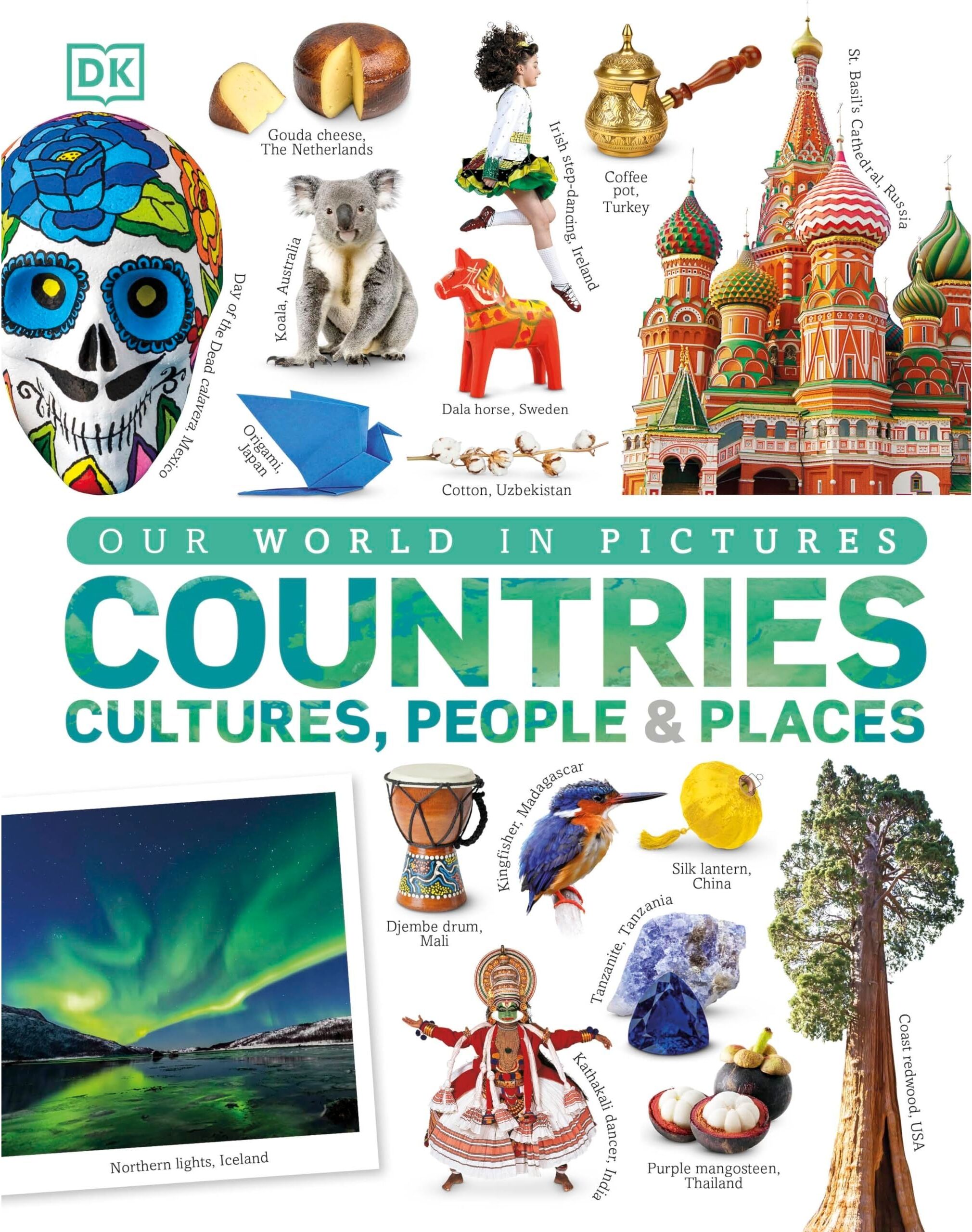
DK Our World in Pictures: Countries, Cultures, People and Places: A Visual Encyclopedia of the WorldPacked with more than 1,000 incredible images and full of fascinating facts, this beautiful children's book takes you on an exciting round-the-globe tour, with a stopover in every nation on every continent! Did you know that Cuba's national sport is baseball, one of the most popular sports in the US? And that kids in both Japan and Chile have earthquake drills on their school schedule? Find out about anything from the spookily vibrant Day of the Dead parade in Mexico and the beautiful springtime cherry blossom displays of Japan, to blueberry-picking in Sweden and India's space programme. Discover the countries of the world - explore their geography, wildlife, traditions, and arts, in this picture-packed children's book. Every country profile is full of photos, and each nation has a full-colour map detailing its main cities, landscape features, and borders, and exactly where in the world they are, in this engaging encyclopedia for children aged 9-12. Celebrate your child's curiosity as they explore: -Striking and detailed diagrams, drawings and illustrations on every page -A highly visual approach to learning -Ideal combination of colourful diagrams with infographic text boxes This captivating kids encyclopedia tackles our weird and wonderful world continent by content, with informative profiles for each of the 196 nations of the world and striking illustrations, photographs and diagrams featured throughout provide an optimum visual learning experience for both children and adults alike, accompanied by an array of fun facts from around the globe! This world encyclopedia includes at-a-glance panels that provide a quick reference to all the stats, making this engaging encyclopedia for kids an ideal combination of colourful diagrams and infographic text boxes with easy-to-read accessible text for readers aged 9-12, yet can be enjoyed by the entire family, making this enthralling children's encyclopedia a beautiful and educational gift that can be passed down generations.7,85 £*Shipping: 2,99 £Secure redirect to the provider
-
William Collins Making Decisions Book – Leadership, Judgement & Smart Thinking GuideWinning takes many forms. For fans of Matthew Syed, this is a great sports book about leadership, judgement and decision-making - rooted in the theory that helped Ed Smith lead England cricket to sustained success. And to help us all win more.'An absolutely fascinating book' THE GAME, The Times football pod How do you spot the opportunities that others miss?How do you turn a team's performance around?How do you make good decisions amid a tidal wave of information? And how can you improve? As chief selector for the England cricket team, Ed Smith pioneered new methods for building successful teams and watched his decisions tested in real time on the pitch. During his three-year tenure, England averaged 7 wins in every 10 completed matches, better than they have performed before or since. Making Decisions reveals Smith's unique approach to finding success in a fast-changing and increasingly data-reliant world.The best decisions, Smith argues, rely on a combination of differing kinds of intelligence: from algorithms to intuition. This is a truth that the most successful people know: data cannot account for everything, it must be harnessed with human insight. Whatever the power of data, humans aren't finished yet.Sharing for the first time the tools he introduced as England selector, Smith's book captures the immediacy of life at the sharp end, while also exploring frameworks from the top levels of sports, business and the arts. Decision-making is revealed as a creative enterprise, not a reductive system. Making Decisions offers an invaluable guide for those who want a better framework for developing, explaining and implementing new ideas.18,35 £*Shipping: 2,99 £Secure redirect to the provider
-
Simon and Schuster UK How Countries Go Broke: Principles for Navigating the Big Debt Cycle, Where We Are Headed, and What We Should DoAn urgent warning about the global economy from Ray Dalio, the #1 New York Times bestselling author of Principles. Do big government debts threaten our collective well-being? Are there limits to debt growth? Can a big, important reserve currency country like the United States really go broke – and what would that look like? For decades, politicians, policymakers and investors have debated these questions, but the answers have eluded them. In this groundbreaking book, Ray Dalio, one of the greatest investors of our time who anticipated the 2008 global financial crisis and the 2010–12 European debt crisis, shares for the first time his detailed explanation of what he calls the 'Big Debt Cycle'. Understanding this cycle is critical for helping policymakers, investors and the general public grasp where we are and where we are headed with the debt issue. Dalio's model points toward surprisingly straightforward solutions for dealing with the debt problems that the US, Europe, Japan and China face today. How Countries Go Broke also shows how these debt problems are related to the other forces – political within countries, geopolitical between countries, natural (droughts, floods and pandemics) and technological (most importantly, AI) – that together are causing what Dalio calls the 'Overall Big Cycle' changes in the world order. By reading this book, you will improve your understanding of what's happening now and what to do about it.17,99 £*Shipping: 2,99 £Secure redirect to the provider
-
Which countries are Balkan countries?
The Balkan countries are located in the southeastern region of Europe and include Albania, Bosnia and Herzegovina, Bulgaria, Croatia, Greece, Kosovo, Montenegro, North Macedonia, Romania, Serbia, and Slovenia. These countries are characterized by their diverse cultures, histories, and landscapes, and are often considered a bridge between the East and the West. The term "Balkan" is derived from the Balkan Mountains, which run through the region. **
-
Which Balkan countries are Islamic countries?
The Balkan countries with a significant Muslim population are Albania, Bosnia and Herzegovina, and Kosovo. These countries have a long history of Islamic influence and have a majority Muslim population. Islam has played a significant role in shaping the culture, traditions, and architecture of these countries. While other Balkan countries also have Muslim communities, these three countries are considered Islamic countries due to their majority Muslim population. **
-
What does central authority and authoritarian leadership mean?
Central authority refers to a system where power and decision-making are concentrated in a single entity or group, such as a government or leader. Authoritarian leadership is a style of leadership where the leader holds all the power and makes decisions without input from others. In an authoritarian system, there is little to no room for dissent or opposition, and individuals are expected to follow orders without question. **
-
What are industrialized countries and developing countries?
Industrialized countries are those that have advanced infrastructure, technology, and high levels of income and standard of living. These countries have highly developed economies and industries, and typically have a high level of urbanization and access to modern amenities. Developing countries, on the other hand, are those that are still in the process of industrialization and have lower levels of income and standard of living. These countries often have less advanced infrastructure and technology, and may have a higher proportion of their population engaged in agriculture. Developing countries are working towards improving their economic and social conditions to reach the level of industrialized countries. **
Similar search terms for Countries
-
How Countries Go Broke Principles for Navigating the Big Debt Cycle, Where We Are Headed, and What We Should Do by Ray Dalio - Non Fiction - Hardback Simon & SchusterDo big government debts threaten our collective well-being? Are there limits to debt growth? Can a big, important reserve currency country like the United States really go broke – and what would that look like? For decades, politicians, policymakers and investors have debated these questions, but the answers have eluded them. In this groundbreaking book, Ray Dalio, one of the greatest investors of our time who anticipated the 2008 global financial crisis and the 2010–12 European debt crisis, shares for the first time his detailed explanation of what he calls the 'Big Debt Cycle'. Understanding this cycle is critical for helping policymakers, investors and the general public grasp where we are and where we are headed with the debt issue. Dalio's model points toward surprisingly straightforward solutions for dealing with the debt problems that the US, Europe, Japan and China face today. How Countries Go Broke also shows how these debt problems are related to the other forces – political within countries, geopolitical between countries, natural (droughts, floods and pandemics) and technological (most importantly, AI) – that together are causing what Dalio calls the 'Overall Big Cycle' changes in the world order. By reading this book, you will improve your understanding of what's happening now and what to do about it.15,99 £*Shipping: 2,99 £Secure redirect to the provider
-
Wilco International LLP How to Win Friends and Influence People by Dale Carnegie Classic Self Help Book on Communication, Leadership, Confidence & Personal DevelopmentDiscover one of the world's best-known personal development books with How to Win Friends and Influence People by Dale Carnegie. First published in 1936, this enduring classic presents practical principles for communicating effectively, building positive relationships and working successfully with other people. Through memorable examples and straightforward advice, Carnegie explores how to make a positive impression, handle disagreements constructively, encourage cooperation and become a more effective communicator. The principles can be applied across everyday life, from personal relationships and social situations to business, management, sales, networking and leadership. Accessible and practical, How to Win Friends and Influence People remains popular with readers interested in improving their communication skills, confidence, interpersonal relationships and professional development. Key Features Classic personal development book by Dale Carnegie Practical principles for improving communication Explores relationships, leadership and interpersonal skills Useful for business, management, sales and networking Helps readers understand effective people skills Suitable for personal and professional development Excellent gift for entrepreneurs, managers and self-improvement readers9,99 £*Shipping: 2,99 £Secure redirect to the provider
-
Little Brown Book Group No Limits: Blow the Cap Off Your Capacity by John C. Maxwell – Personal Growth & Leadership Development GuideNo Limits: Blow the CAP Off Your Capacity Description We often treat the word capacity as if it were a natural law of limitation. Unfortunately; most of us are much more comfortable defining what we perceive is off limits rather than what's possible. Could it be that many people have allowed what they perceive as capacity to define them? Have they allowed their perception to limit their attitudes about their potential? In his newest book; John Maxwell identifies 17 core capacities. Some of these are abilities we all already possess; such as energy; creativity and leadership. Others are aspects of our lives controlled by our choices; like our attitudes; character; and intentionality. Maxwell examines each of these 17 capacities; and provides clear and actionable advice on how you can increase your potential in each. He will guide you on how to identify; grow; and apply your critical capacities to your daily life. Once you've blown the 'cap' off your capacities; you'll find yourself more successful--and fulfilled--in your daily life.5,99 £*Shipping: 2,99 £Secure redirect to the provider
-
MACMILLAN A Higher Loyalty - Truth Lies And LeadershipA Higher Loyalty: Truth, Lies, and Leadership In his Number One bestselling memoir, former FBI director James Comey shares his never-before-told experiences from some of the highest-stakes situations of his career in the past two decades of American government, exploring what good, ethical leadership looks like, and how it drives sound decisions. His journey provides an unprecedented entry into the corridors of power, and a remarkable lesson in what makes an effective leader. Mr. Comey served as director of the FBI from 2013 to 2017, appointed to the post by President Barack Obama. He previously served as U.S. attorney for the Southern District of New York, and the U.S. deputy attorney general in the administration of President George W. Bush. From prosecuting the Mafia and Martha Stewart to helping change the Bush administration's policies on torture and electronic surveillance, overseeing the Hillary Clinton e-mail investigation as well as ties between the Trump campaign and Russia, Comey has been involved in some of the most consequential cases and policies of recent history.5,99 £*Shipping: 2,99 £Secure redirect to the provider
-
'Neighboring countries'
Neighboring countries are countries that share a border with each other. These countries often have close geographical, cultural, and economic ties due to their proximity. Neighboring countries may have agreements in place to facilitate trade, travel, and cooperation on various issues. It is important for neighboring countries to maintain good relations in order to promote peace and stability in the region. **
-
Neighboring countries
Neighboring countries are countries that share a common border or are geographically close to each other. These countries often have cultural, economic, and political ties due to their proximity. Neighboring countries frequently engage in trade, travel, and diplomatic relations to foster cooperation and mutual understanding. However, disputes over borders, resources, or historical conflicts can also arise between neighboring countries. **
-
European countries
European countries are nations located on the continent of Europe. There are 44 countries in Europe, each with its own unique culture, history, and language. Many European countries are members of the European Union, which promotes economic and political cooperation among its members. European countries are known for their rich cultural heritage, diverse landscapes, and high standard of living. **
-
Why can't other countries orient themselves towards the Swiss model?
Other countries may not be able to orient themselves towards the Swiss model because Switzerland's unique political and historical context may not be easily replicable. The Swiss model is based on a system of direct democracy, federalism, and consensus-building, which may not be suitable for all countries. Additionally, Switzerland's small size and homogenous population may make it easier for them to implement such a system, whereas larger and more diverse countries may face greater challenges in doing so. Finally, the Swiss model has evolved over centuries and is deeply ingrained in the country's culture, making it difficult for other countries to simply adopt it without considering their own unique circumstances. **
* All prices are inclusive of VAT and, if applicable, plus shipping costs. The offer information is based on the details provided by the respective shop and is updated through automated processes. Real-time updates do not occur, so deviations can occur in individual cases. ** Note: Parts of this content were created by AI.